
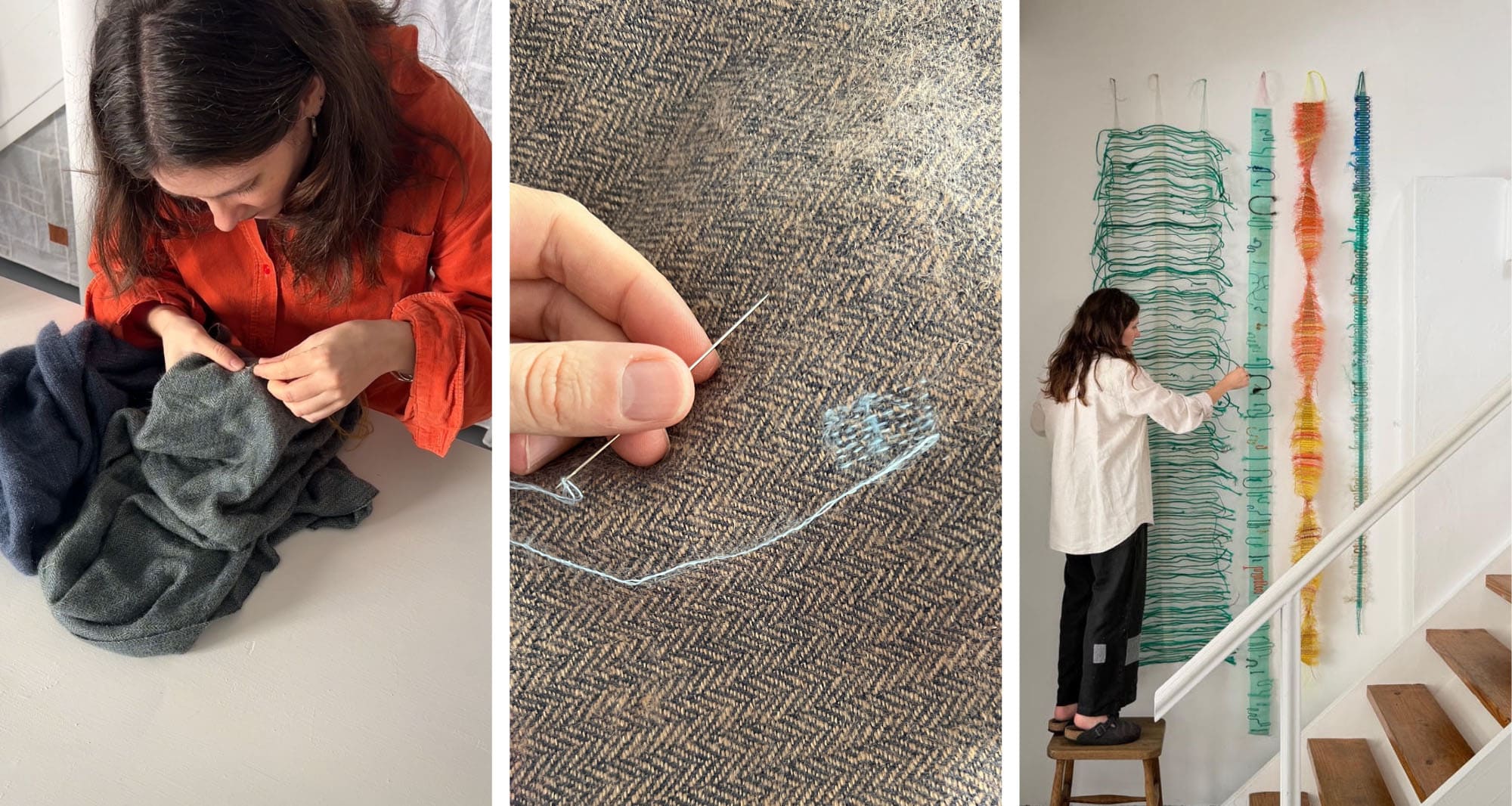
The Beauty of Imperfection
A conversation with textile designer Lucie Panis Jones on visible mending, imperfection and the stories our textiles carry.
Cloth records our lives.
A tea towel softens after years in the kitchen. A favourite jersey remembers the shape of folded arms. Jeans fade where hands reach instinctively for pockets. Long before something tears, it begins collecting evidence of being lived with.
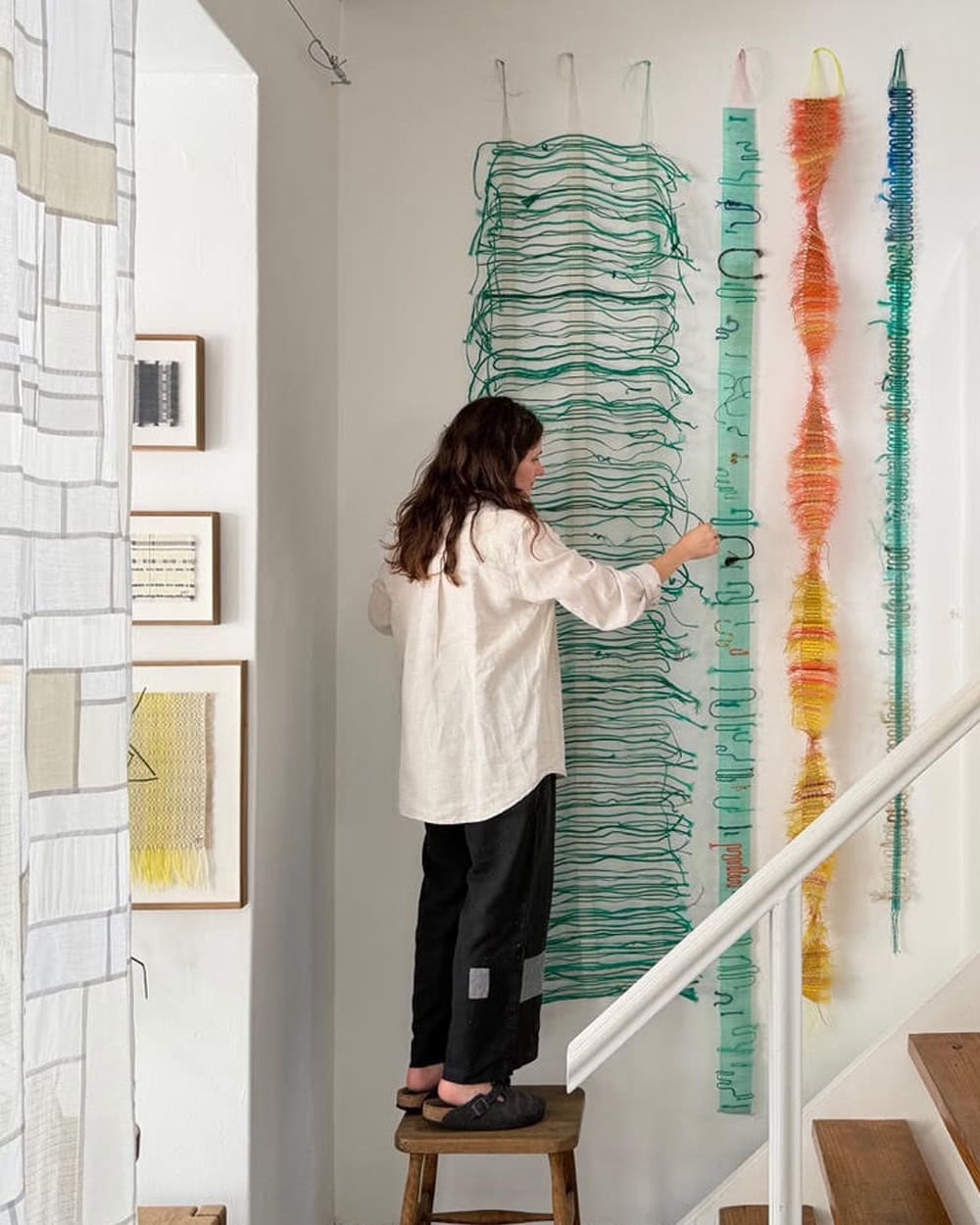
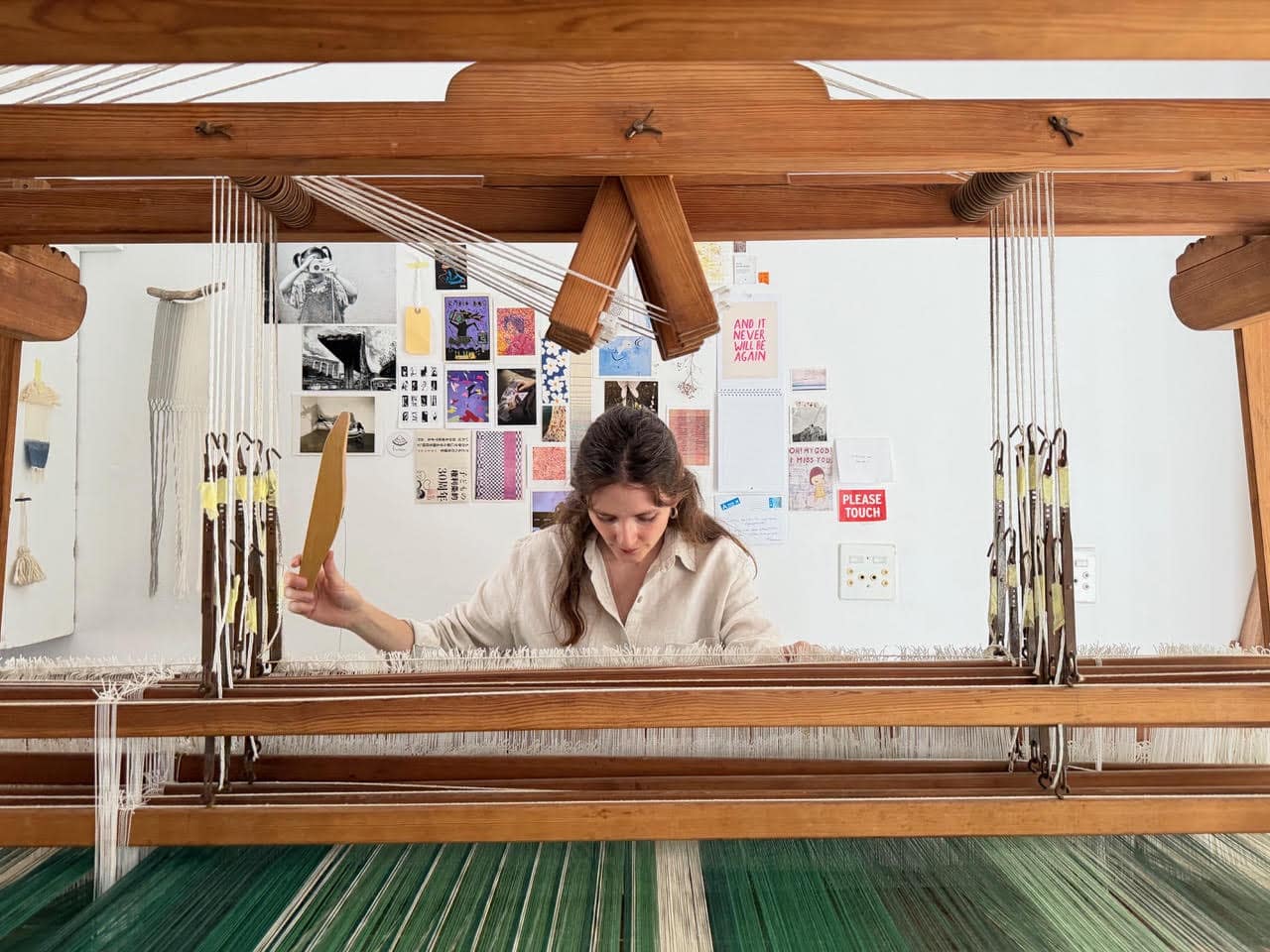
Lucie Panis Jones at her loom in her studio
At Mungo, we’re meticulous about the cloth that leaves our mill. Every towel, blanket and scarf passes through multiple quality checks, and if there’s a weaving flaw, it becomes a second, and goes to our annual mill sale.
Usually, that’s where the story ends.
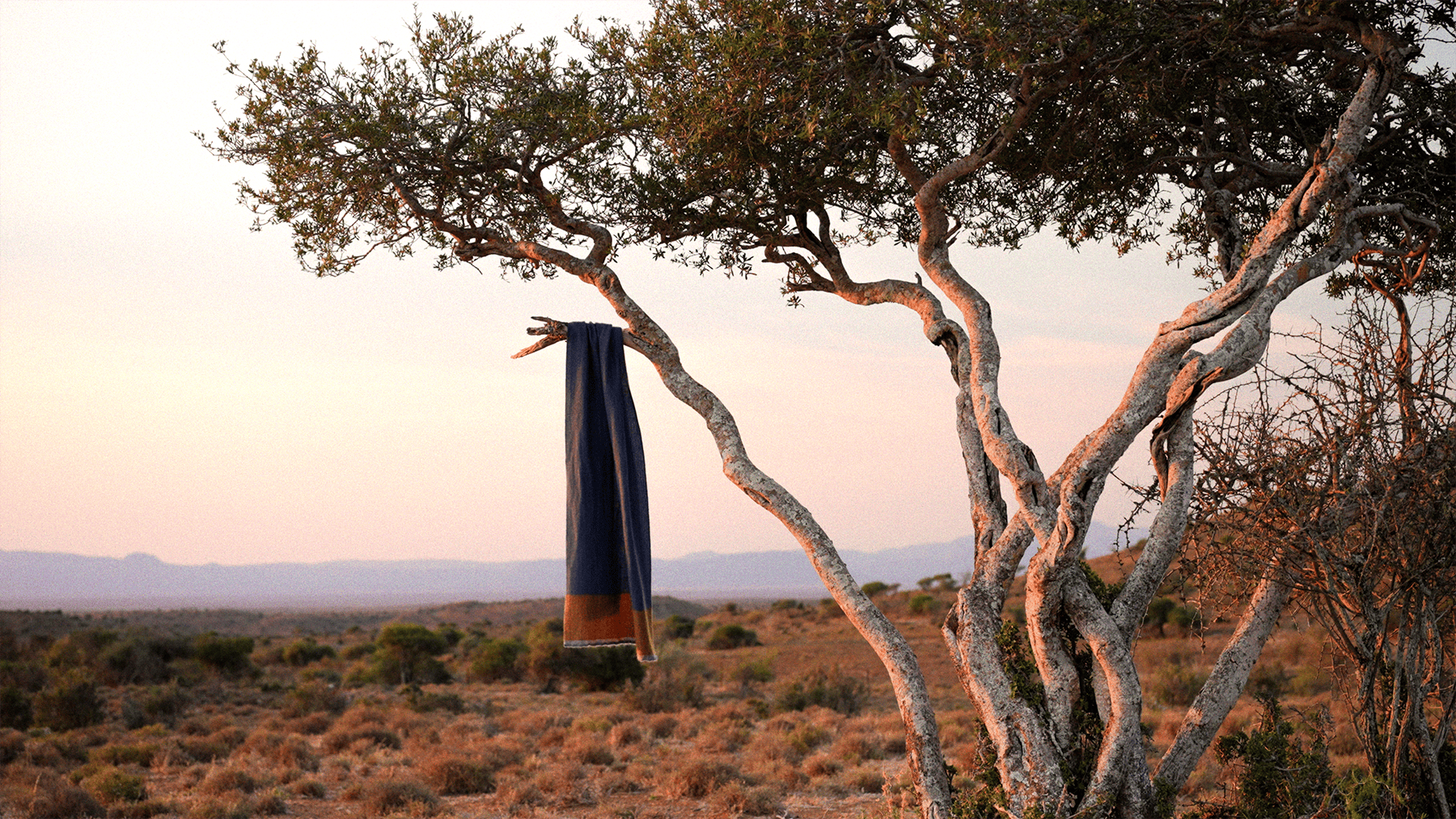
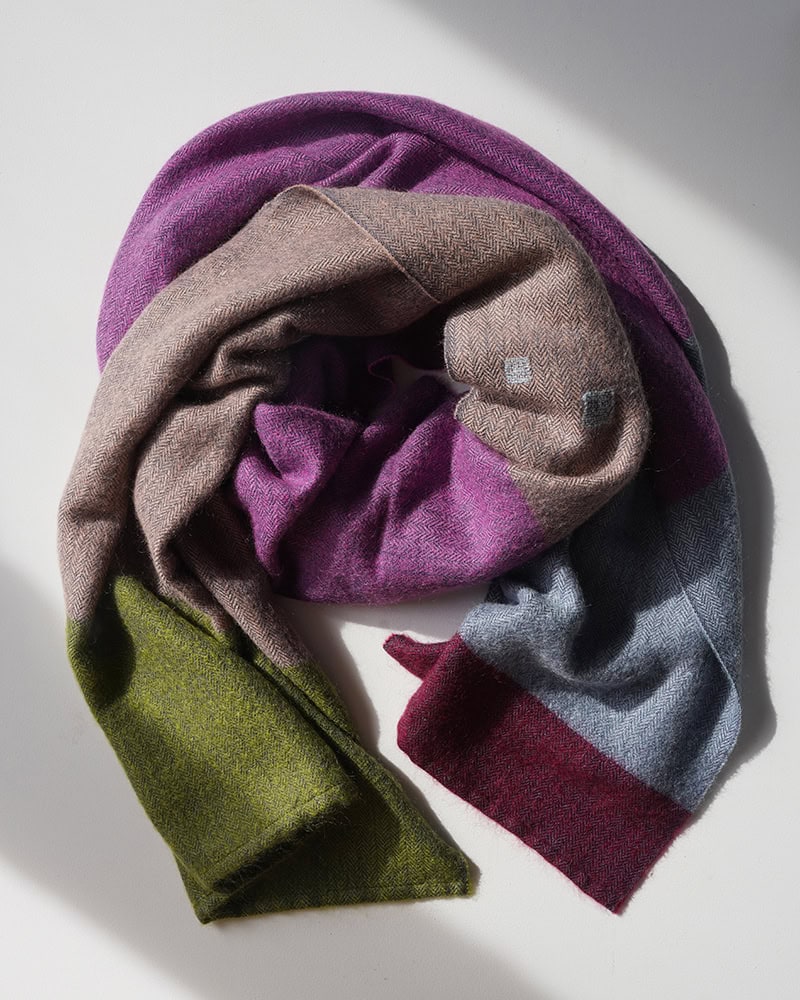
But when we began weaving the MOS Wrap, with its distinctive blend of mohair, bamboo and silk, we wondered whether a flaw could become something else entirely, not hidden, but celebrated.
Most of us are taught to hide those signs of wear. Visible mending suggests another way. Rather than disguising repair, it celebrates it. Every stitch becomes part of the textile’s story.
Long-time readers may remember our visit to Lucie’s studio in our Mungo Hout Street store a few years ago, where we spoke about weaving, Boro and her philosophy of making with intention. This time, we wanted to return to the conversation through the lens of visible mending.
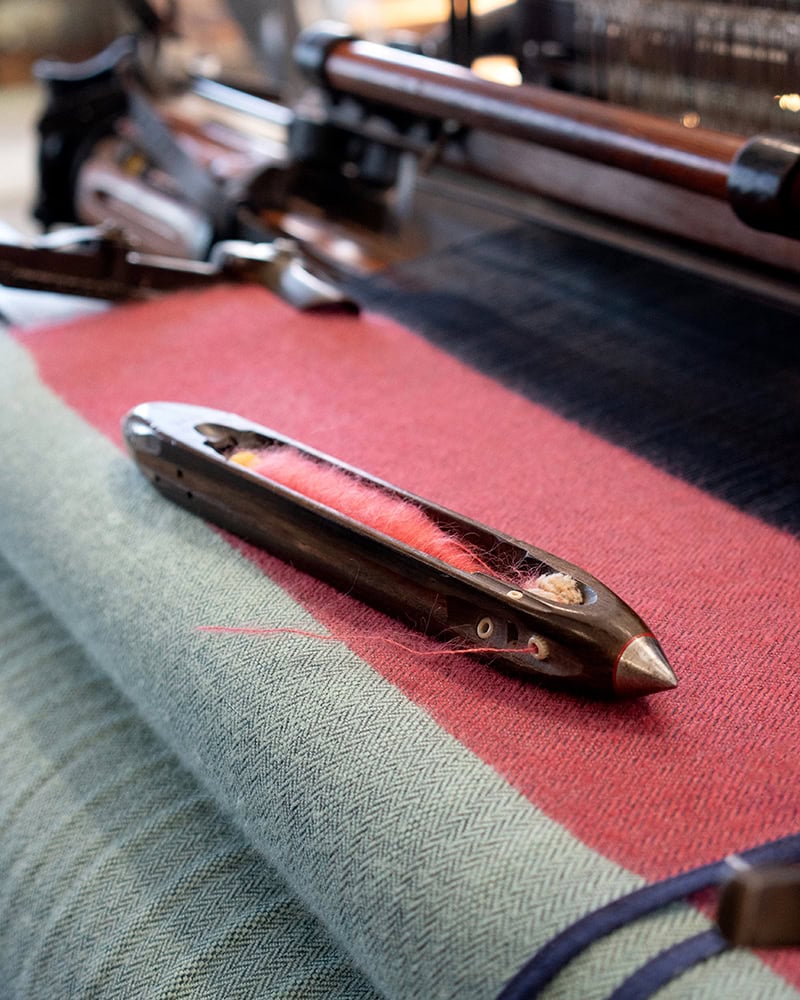
A MOS Wrap on the loom.
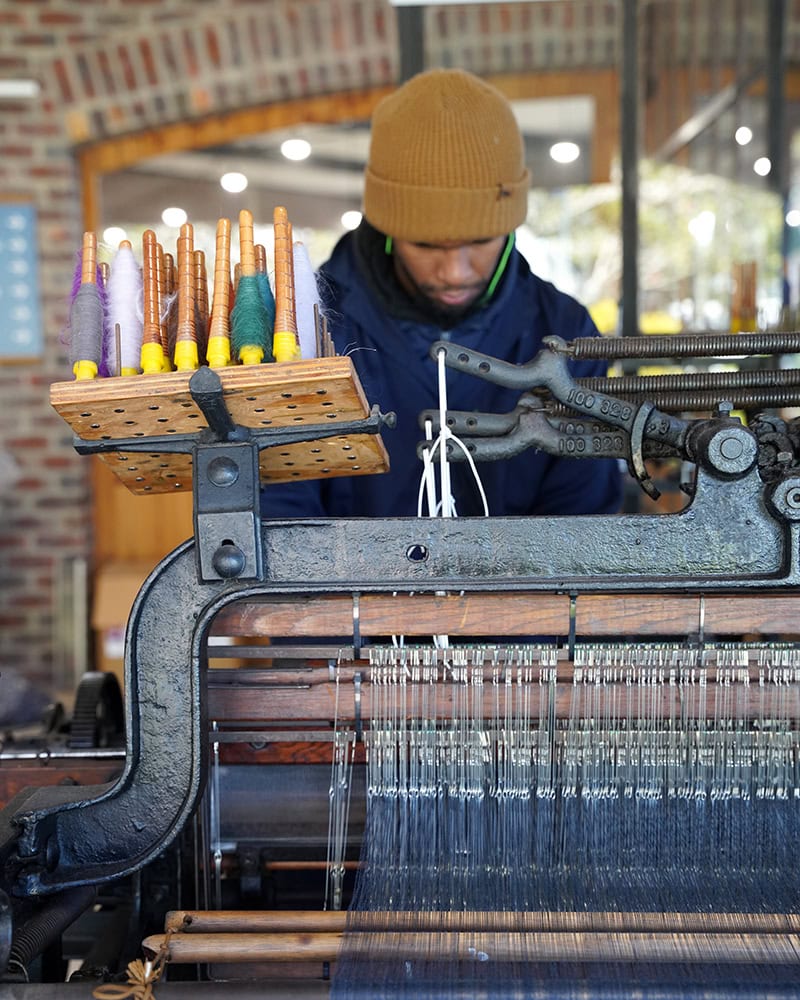
Raoul on the Hattersley Loom.
We asked Lucie about her visible mending journey. Read the interview below…
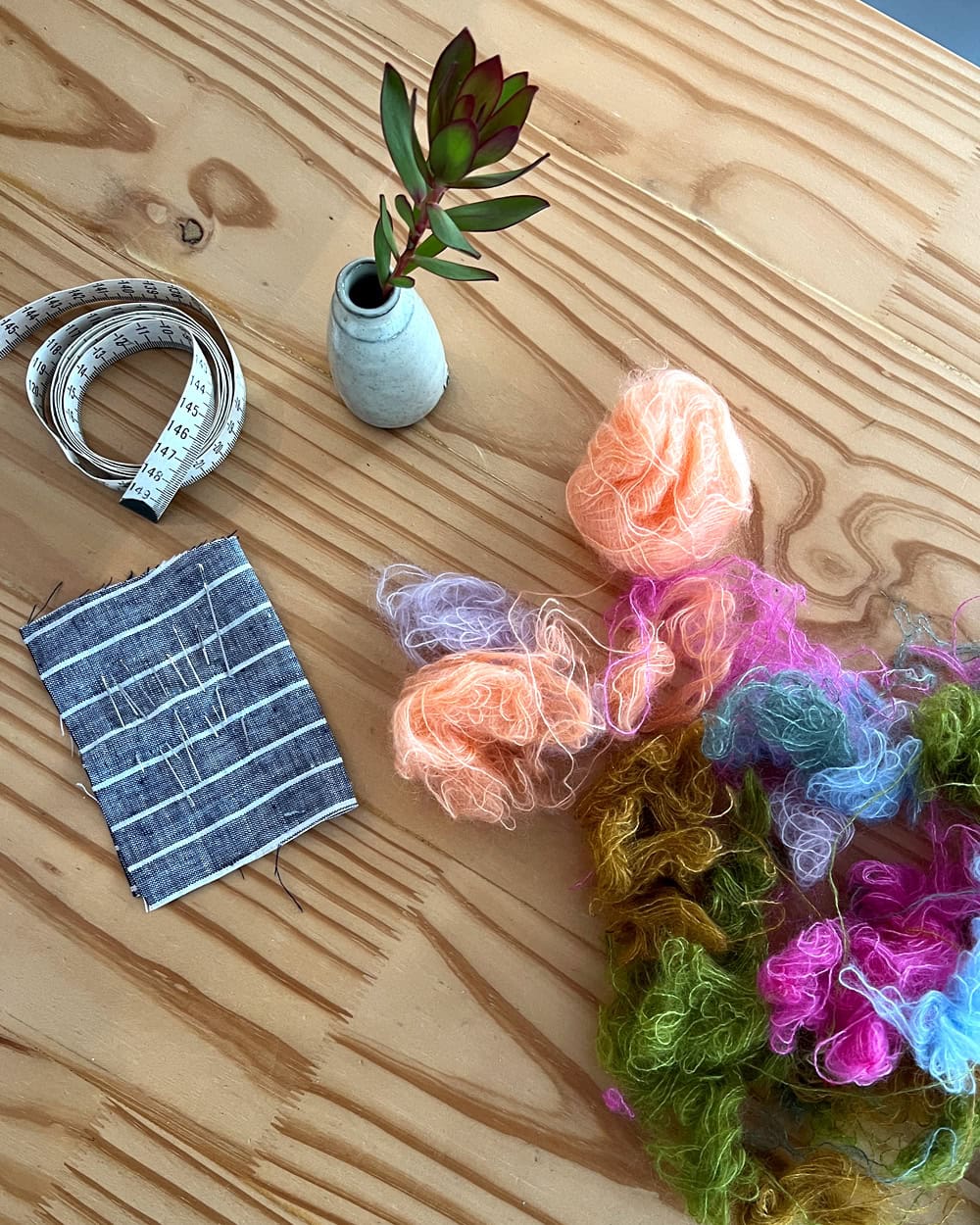
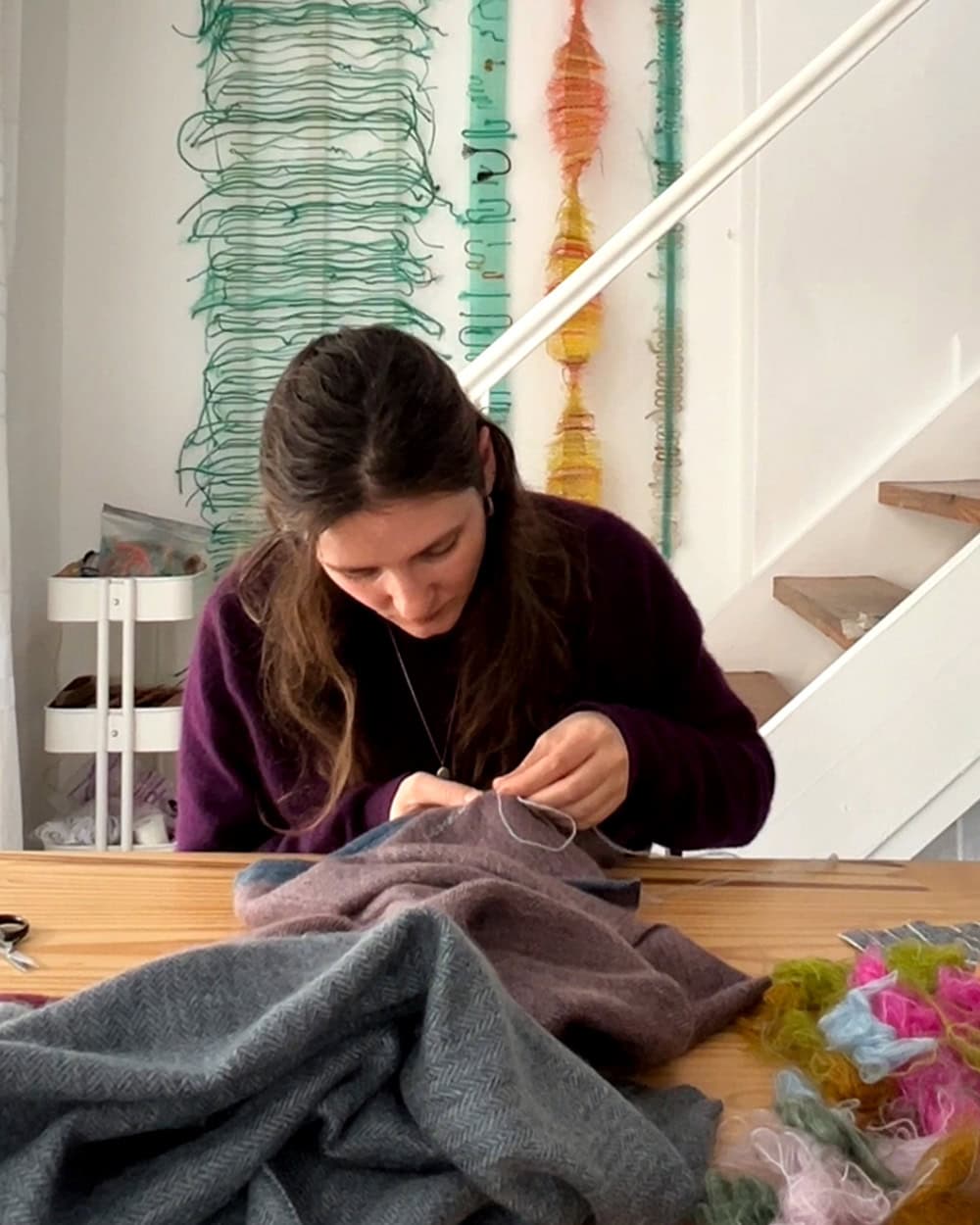
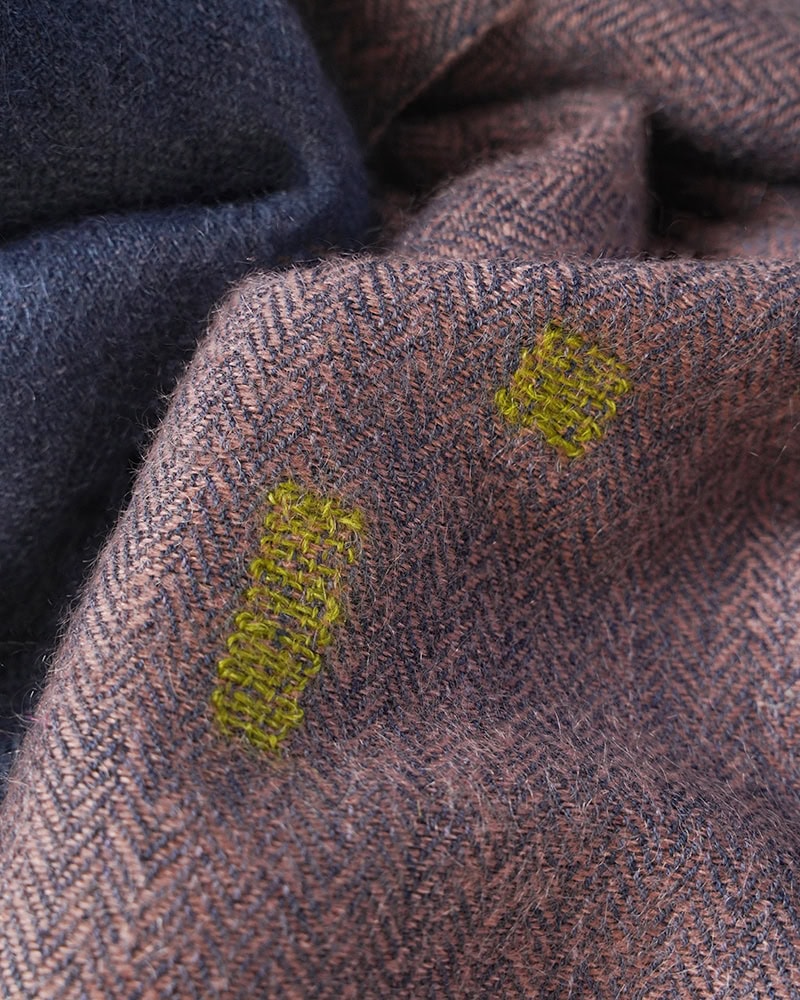
Lucie
I used to think of mending as a solitary act, but I’ve come to see it as an act of community care, something that is more impactful when shared. Visible mending doesn’t have to be perfect, that’s kind of the point. I love that it embraces the noticeable, the wonky, the colourful, the imperfect.
In a culture so driven by newness, wearing “worn” is seen by some as not ideal or presenting their best selves. What do you think shifts when we choose to make visible repair? What do you think about visible mending in a South African context?
I think mending can connect us a little more to how clothing is made – the time and energy that went into making it, and the people who made it. Even fast fashion items are still made by people. I think it’s too easy to forget that.
Slowing down to take the time to repair something, even if it’s just re-attaching a loose button, can connect to that piece of clothing a little more. For me, every time I see a particular repair I am reminded about where I was when I fixed it, what was around me, what I was listening to…
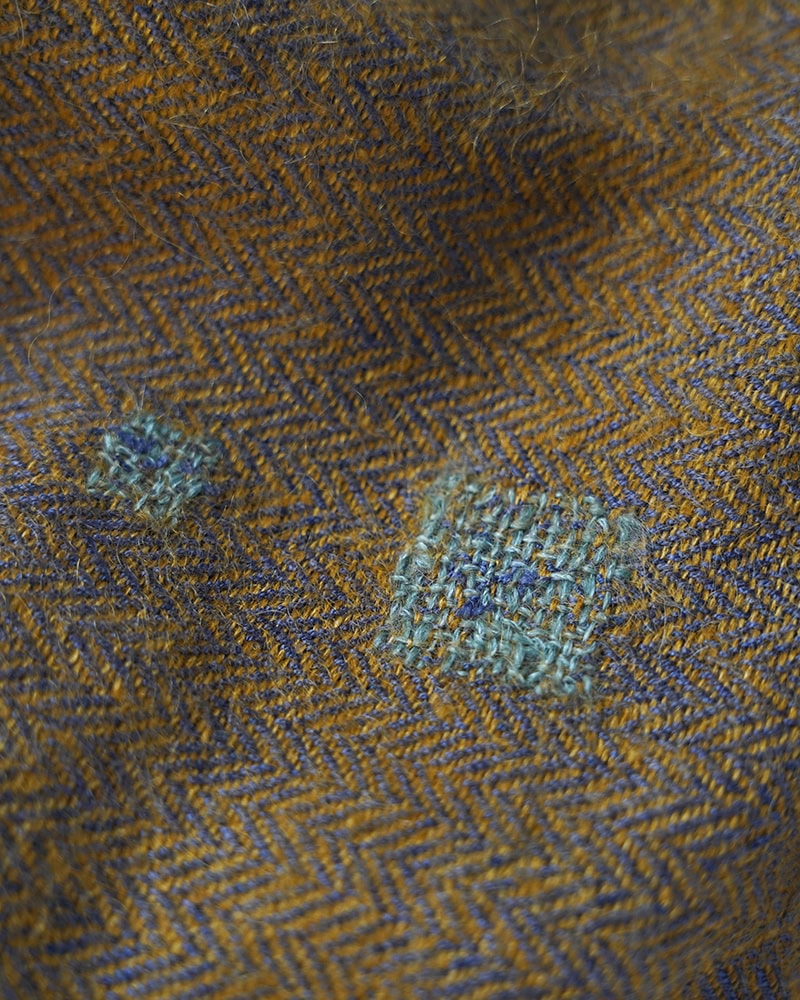
“The repair becomes a little visual receptacle of memories.”
– Lucie Panis Jones
It’s a beautiful way of thinking about cloth. At Mungo we often speak about durability in practical terms; good fibre, strong selvedges, careful finishing. But perhaps longevity is emotional too. The longer something stays with us, the more of our own story it gathers.
Investing time into repairing a garment can seem almost frivolous in a world where fast fashion is so accessible. As Lucie points out, the irony is that it’s often cheaper to replace something than repair it.
Our relationship with clothing has shifted dramatically over the last half century. Where wardrobes were once built slowly and garments repaired when needed, clothing is now consumed at an unprecedented pace. Many unwanted textiles ultimately end up in landfill, or are shipped elsewhere under the guise of charitable donation.
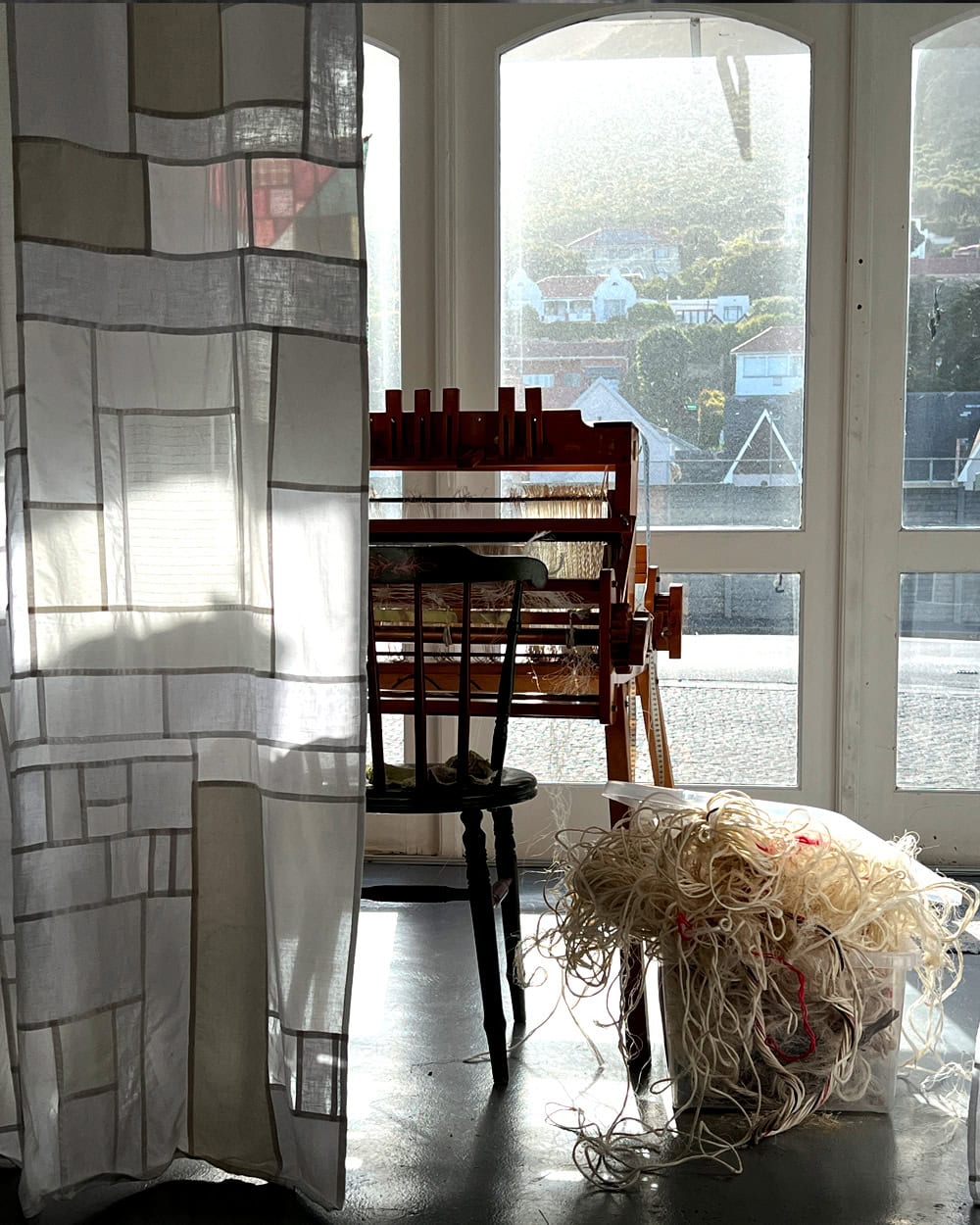
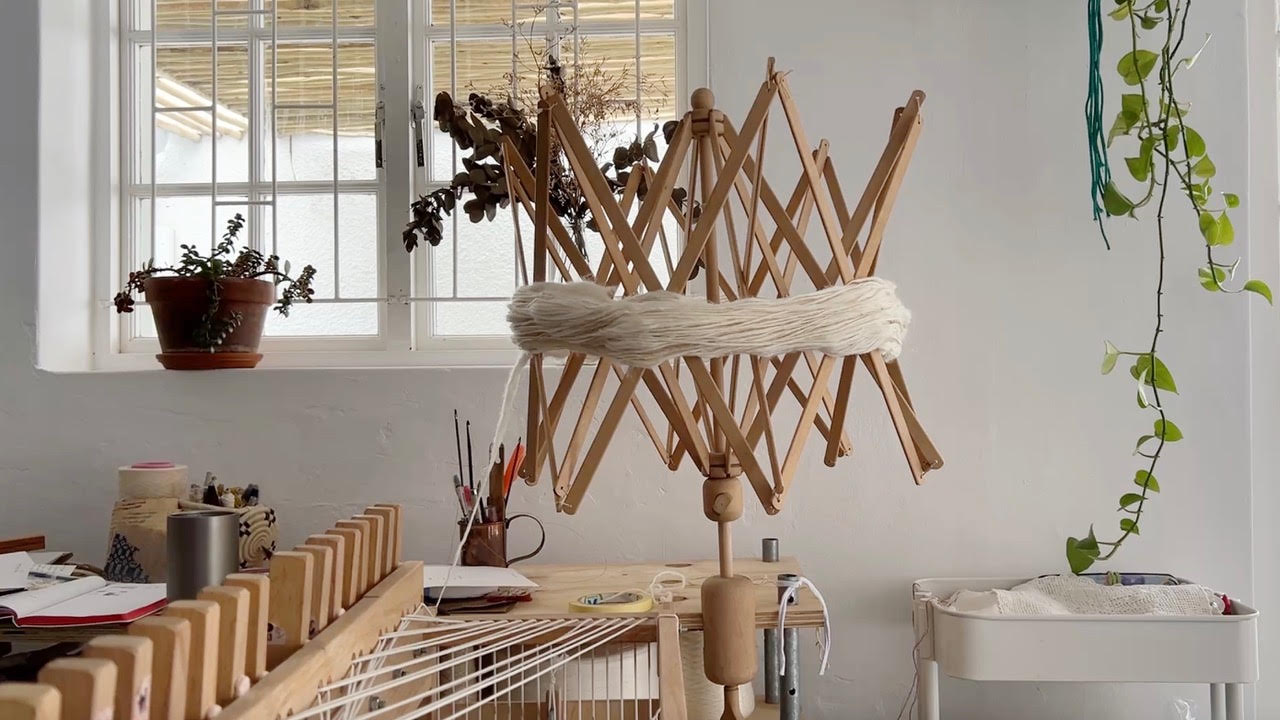
Lucie’s studio.
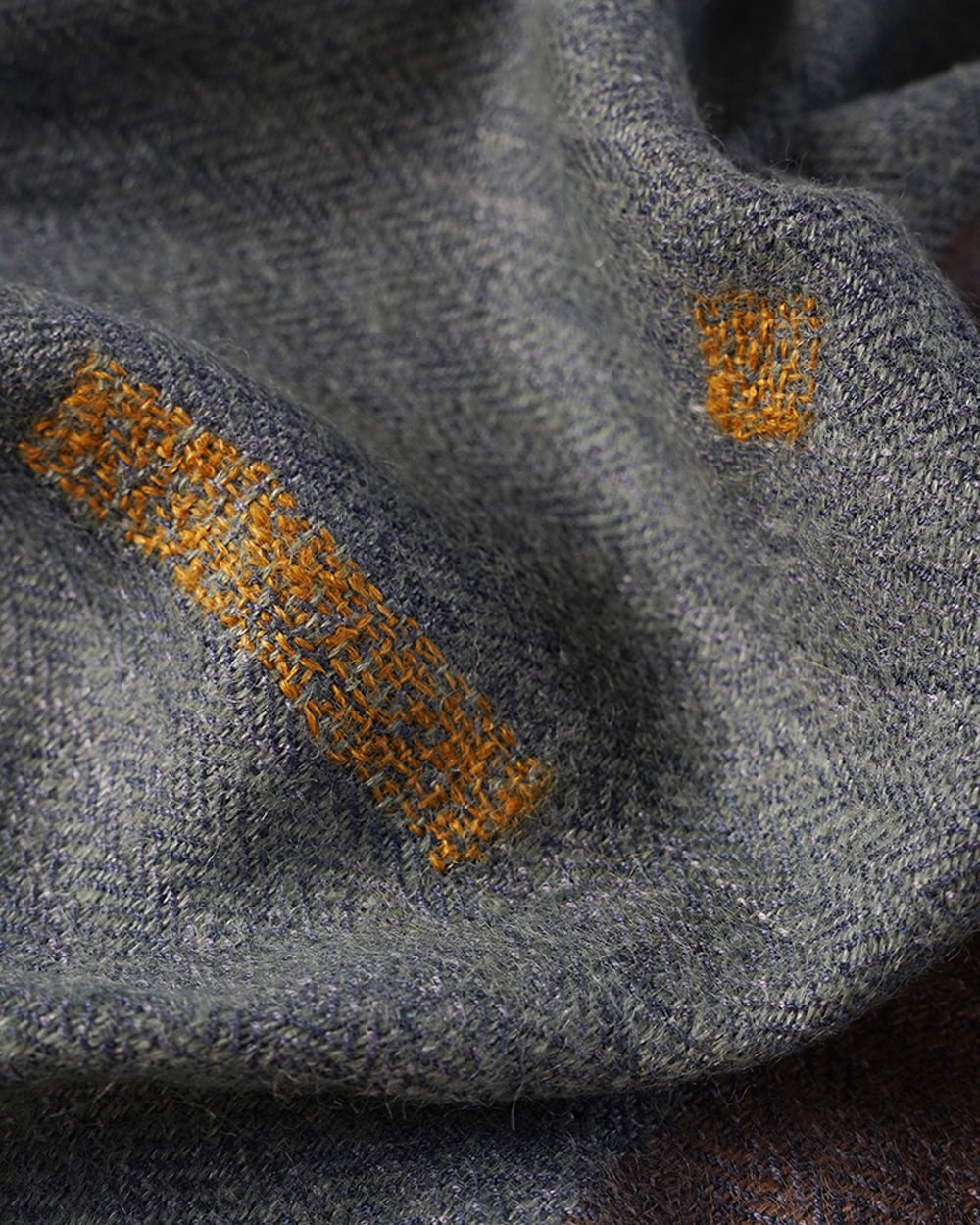
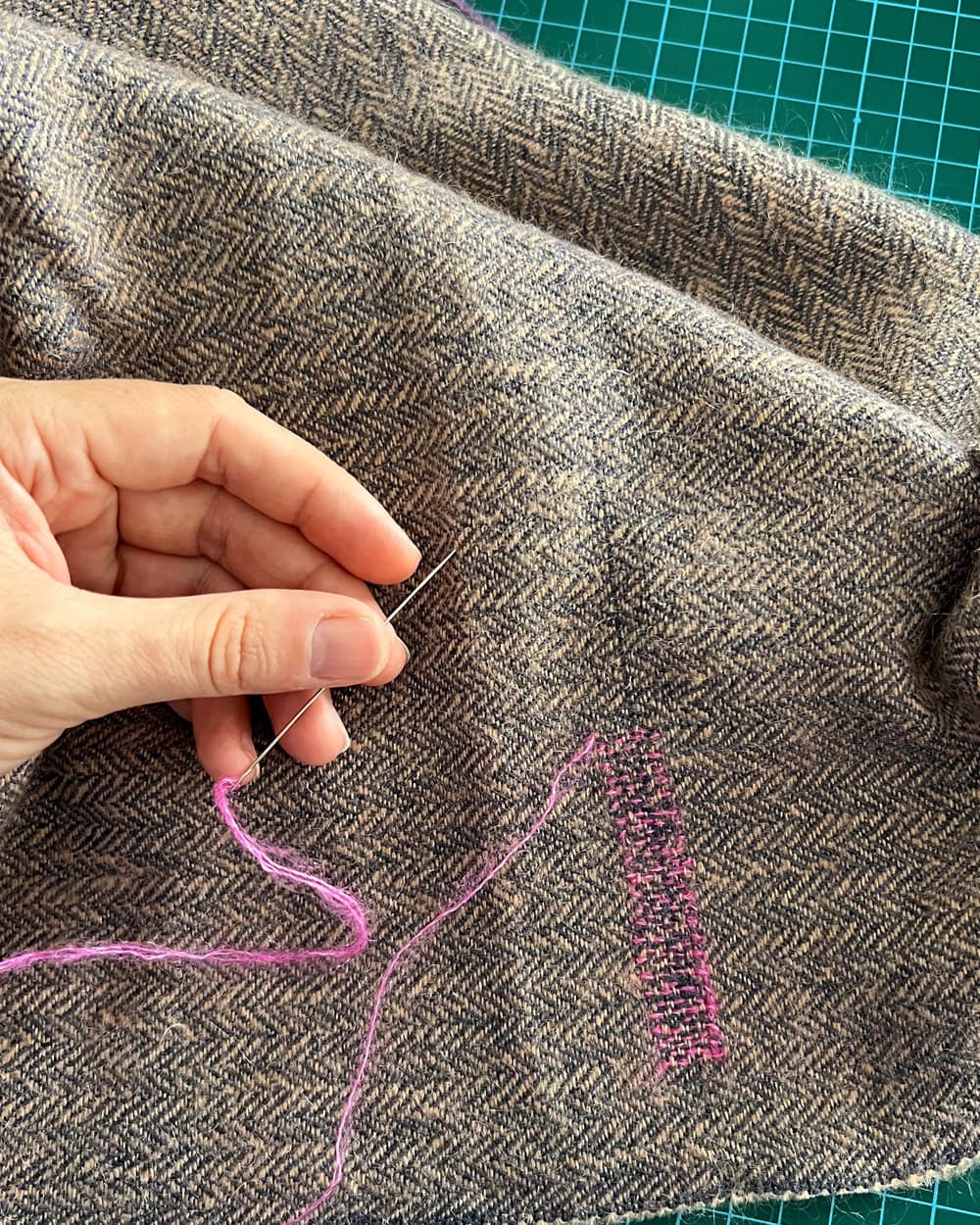
Visibly Mended Mos Wrap.
“As Lucie reminds us, mending can be a small act of resistance. It won’t solve the problem on its own. But it asks us to pause, value what we already own, and reconsider what we choose to discard.“
We can’t resist asking what is currently on your loom and in your studio?
I have one warp on a table loom I’m busy with – a simple spaced warp of monofilament fishing line, and I’m weaving in pieces of found beach rope. It’s a huge white net that I’ve cut into sections, and you can see the wear and tear in certain areas. I love seeing the passage of time in the material itself. I also recently visited friends and family on my holiday and now have a small mountain of clothing to add to my ever-growing mending pile.
When we last spoke, you said you hoped to teach one day. Have you started teaching or hosting workshops?
I’ve finally started teaching visible mending workshops. It’s such a joy to see people go from feeling unsure to capable and proud of their mends in a short timeframe. I’m also working on building some small tapestry frames to start hosting tapestry weaving workshops soon!
Mending asks us to slow down, pay attention, and work with our hands. What has the act of stitching taught you?
Mending allows me to feel present and grounded, when my hands are busy I settle in and can actually listen, and listen deeply.
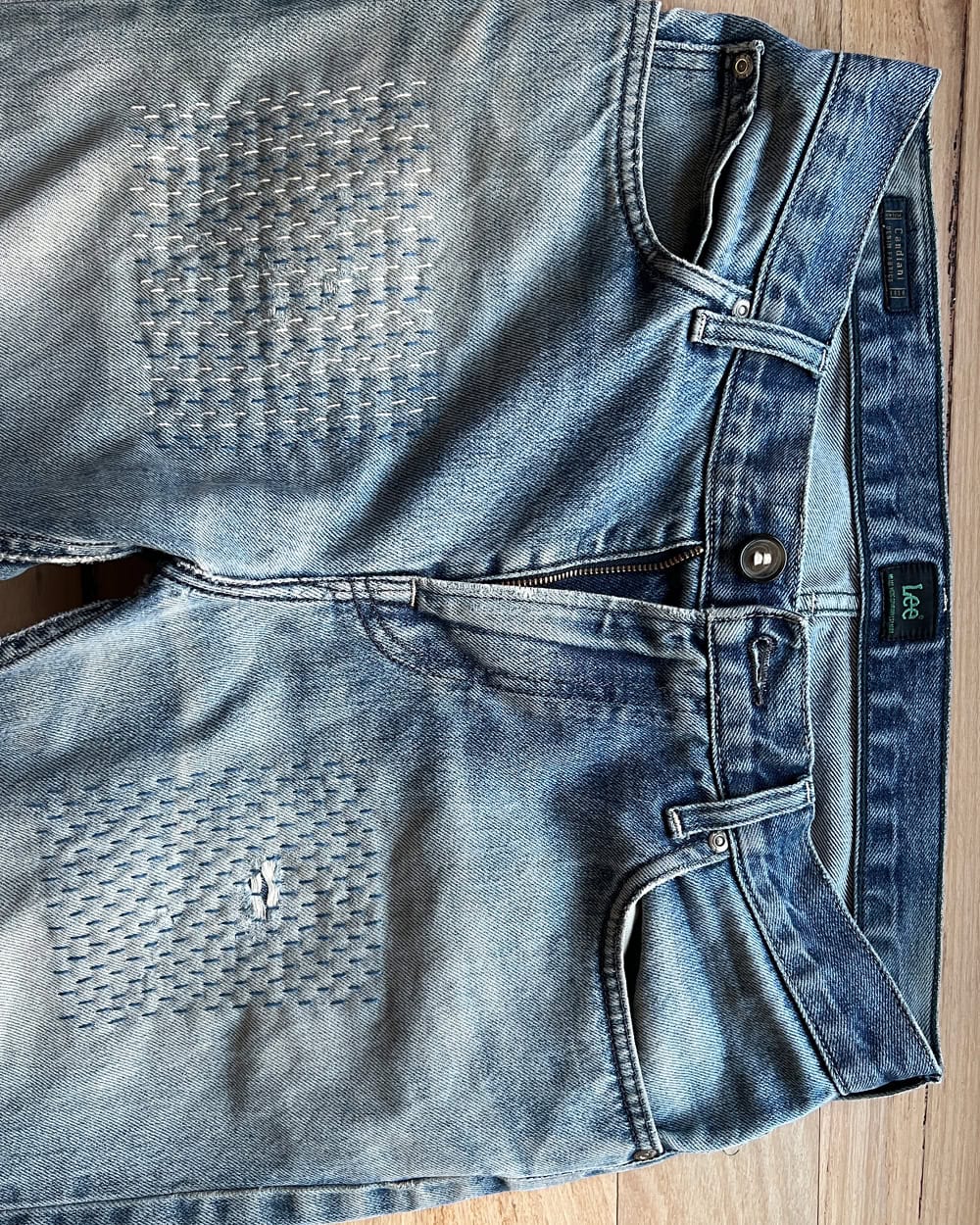
Lucie’s partner’s mended jeans.
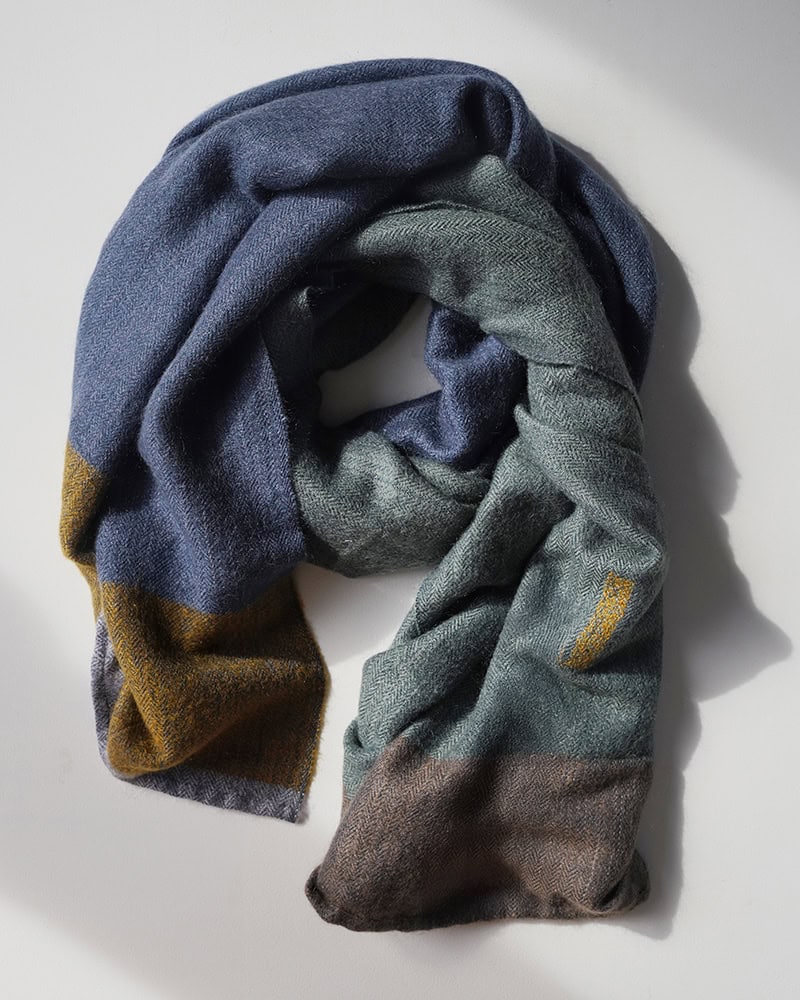
Visibly Mended Mos Wrap.
A garment you’ve mended the most? My partner’s jeans! I’ve fixed them many times over the years – adding patches and shashiko stitching to worn-out knees and pockets, reinforcing the inner thighs, swapping out lost buttons… I’m sure there will be many more repairs to come.
Favourite stitch or technique? Darning, which can feel like magic – otherwise I love a parachute stitch – it’s simple but effective, especially great for narrow rips.
Something worth mending, every time? A nice pair of 100% cotton jeans, a thick wool jersey – any item that will stand the test of time with a bit of extra care.
A repair you’ll never forget? My first mend for a stranger. He got in touch after he saw my poster for visible mending in a café. I ended up mending his late brother’s jacket so that he could keep wearing it. It was a simple repair but it felt so meaningful to be entrusted with it. And I was honoured to add a small piece to the jacket’s life and history, and I’m grateful for the friendship that followed.
One word that defines visible mending for you? Care.
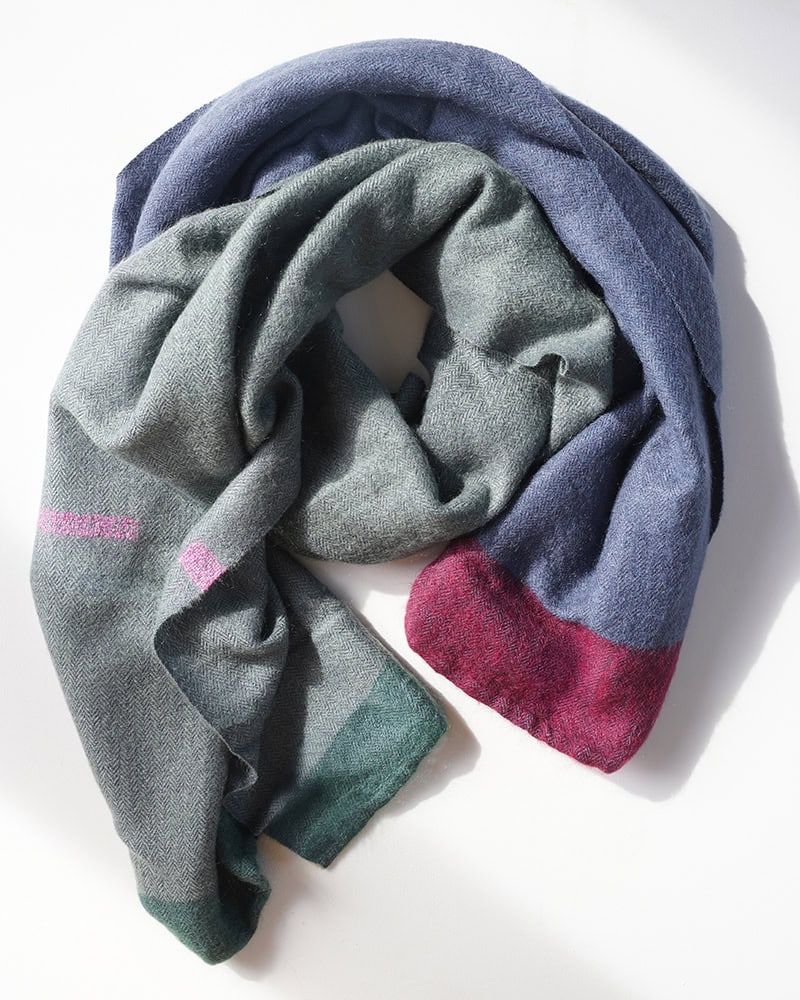
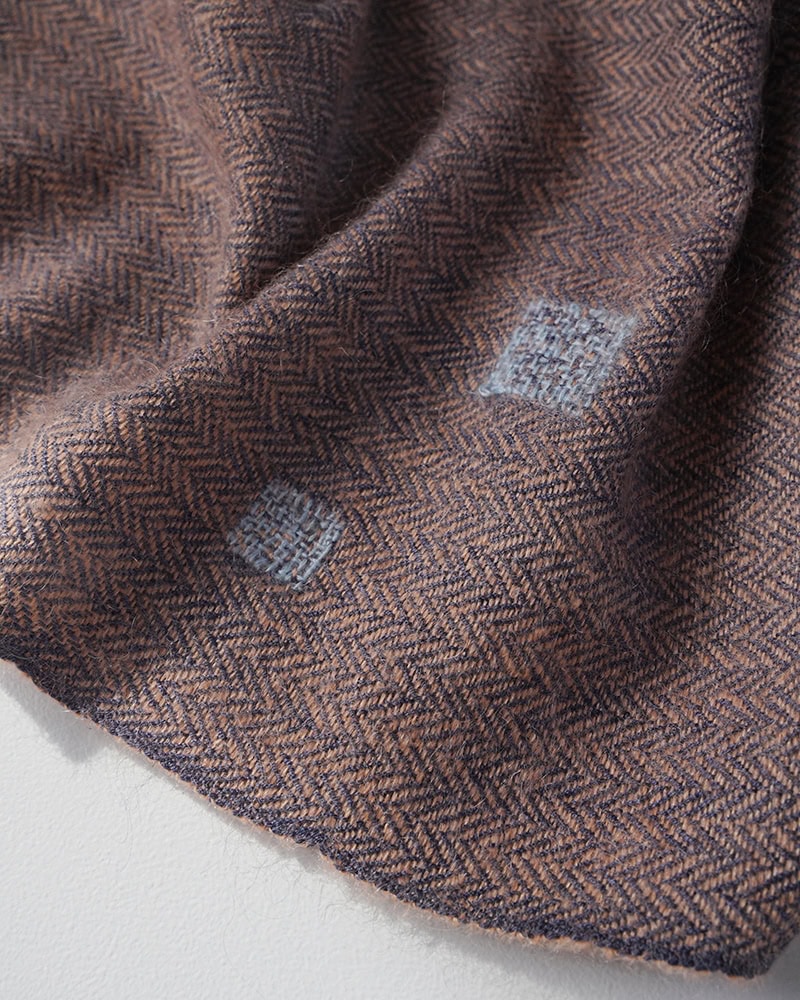
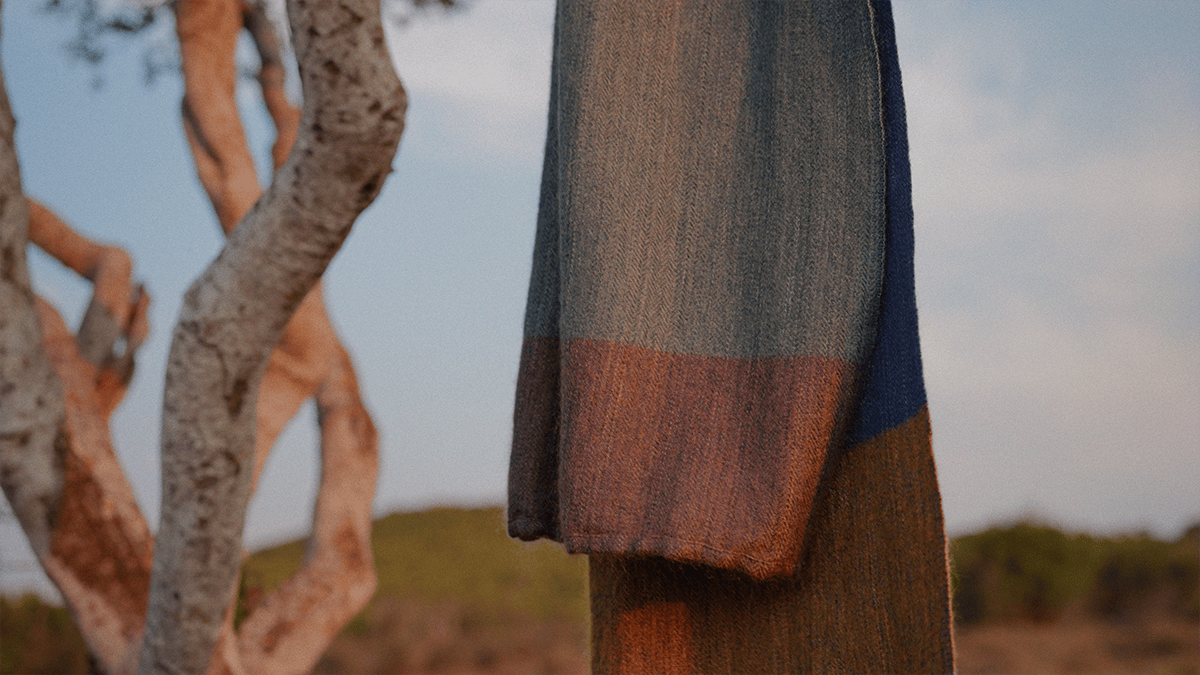
At the Mungo we often talk about longevity. We think about fibre quality, weave structure and construction because we hope our textiles will become part of daily rituals for many years.
But longevity doesn’t mean remaining untouched.
Linen softens. Cotton fades. Edges wear. Tea towels become polishing cloths before becoming workshop rags. Favourite blankets develop familiar folds. These changes aren’t failures of the cloth, they’re evidence that it has been lived with.
Visible mending reminds us that weaving isn’t always the final act of making. Cloth continues to evolve long after it leaves the loom, carrying the marks of use, repair and care. Sometimes, the next pair of hands adds just as much meaning as the first.
Perhaps that’s why visible mending feels quietly hopeful. Not because it restores things to how they were, but because it reminds us that care leaves its own kind of beauty.
The MOS Wraps in this collection each carry a visible mend by Lucie, no two are alike, and each one tells its own story.


Lynn Berrisford
Dear Lucie. I loved reading this article. I am hopeless at sewing, but have always enjoyed mending clothes and bedding. I have a few cashmere jersies which have holes in the left elbow – I have resorted to mending these with embroidery thread or cotton because I have been unable to find cashmere here in the correct colour. Do you ever have any threads in different colours or ideas for me please? Yours sincerely, Lynn
Lauriane Neave
Hi Lynn, thank you so much. And that is great to hear! It looks like there is quite a big selection to be found here. Happy mending!