
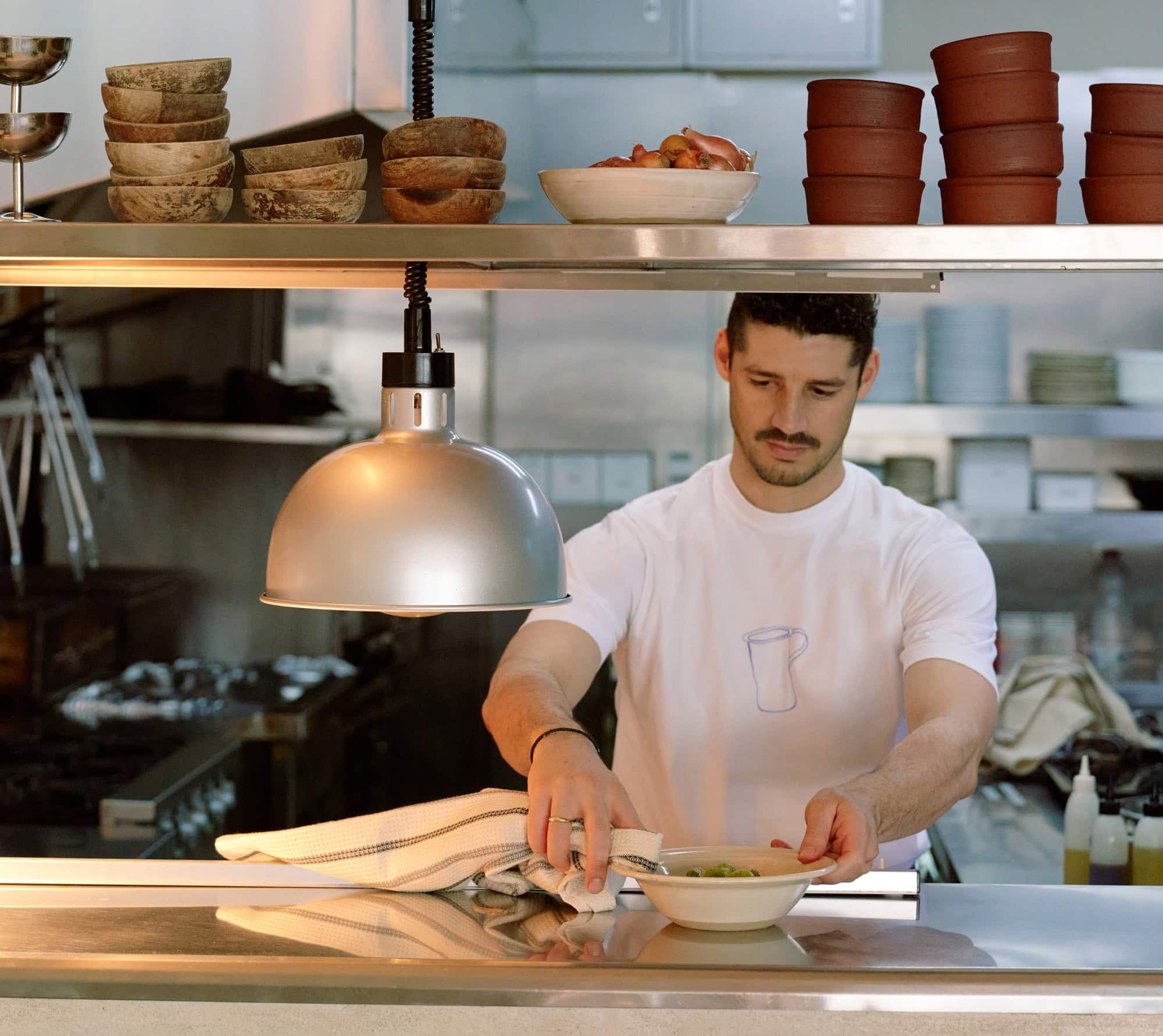
In The Kitchen | With Nic Charalambous of Ouzeri
At Mungo, we’re drawn to people who care deeply about how things are made. People who understand the value of good materials, inherited knowledge and doing things with intention. In Cape Town’s Ouzeri, chef-owner Nic Charalambous brings these ideas to the table, drawing on the food and memories of his Cypriot childhood to create something distinctly his own.
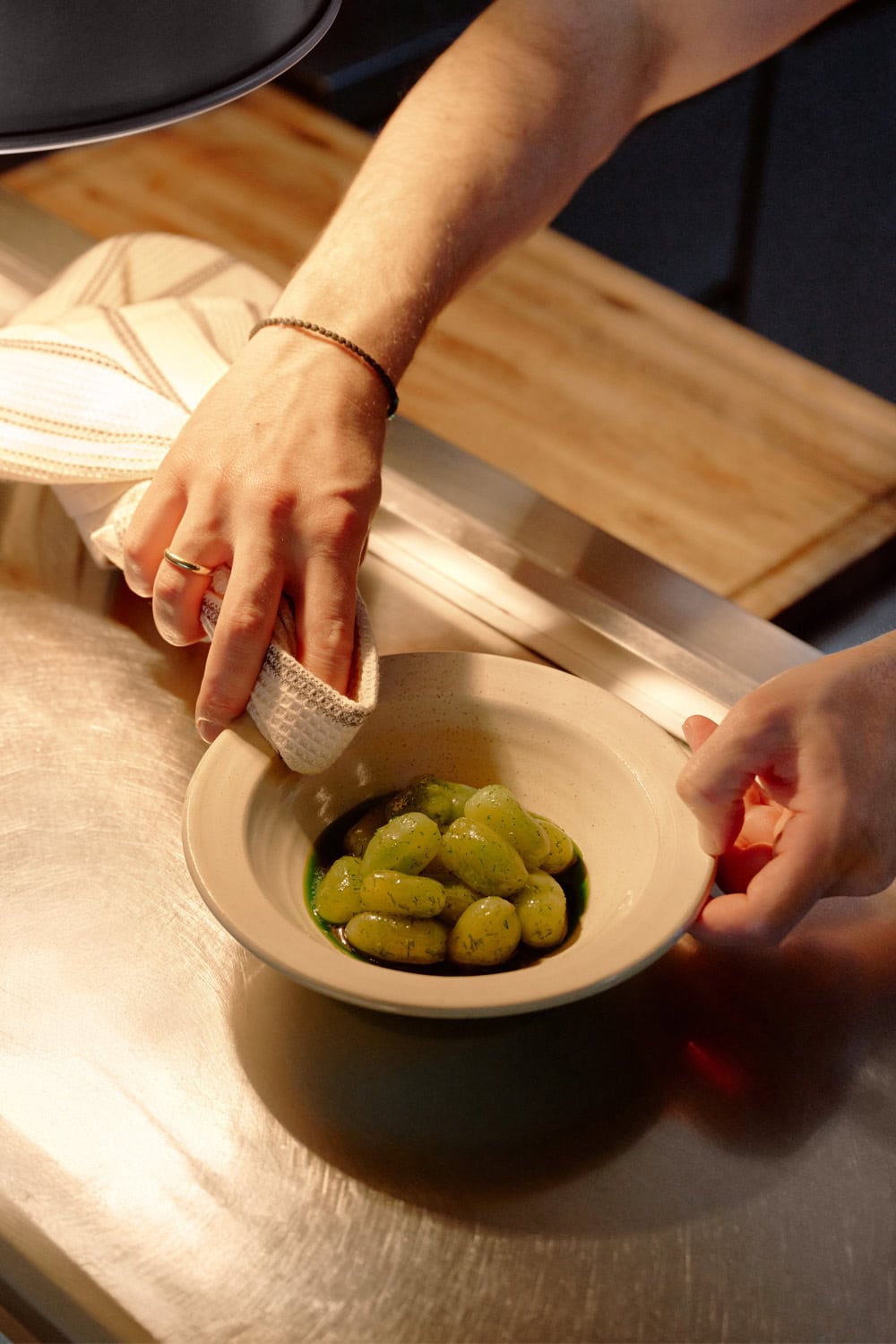
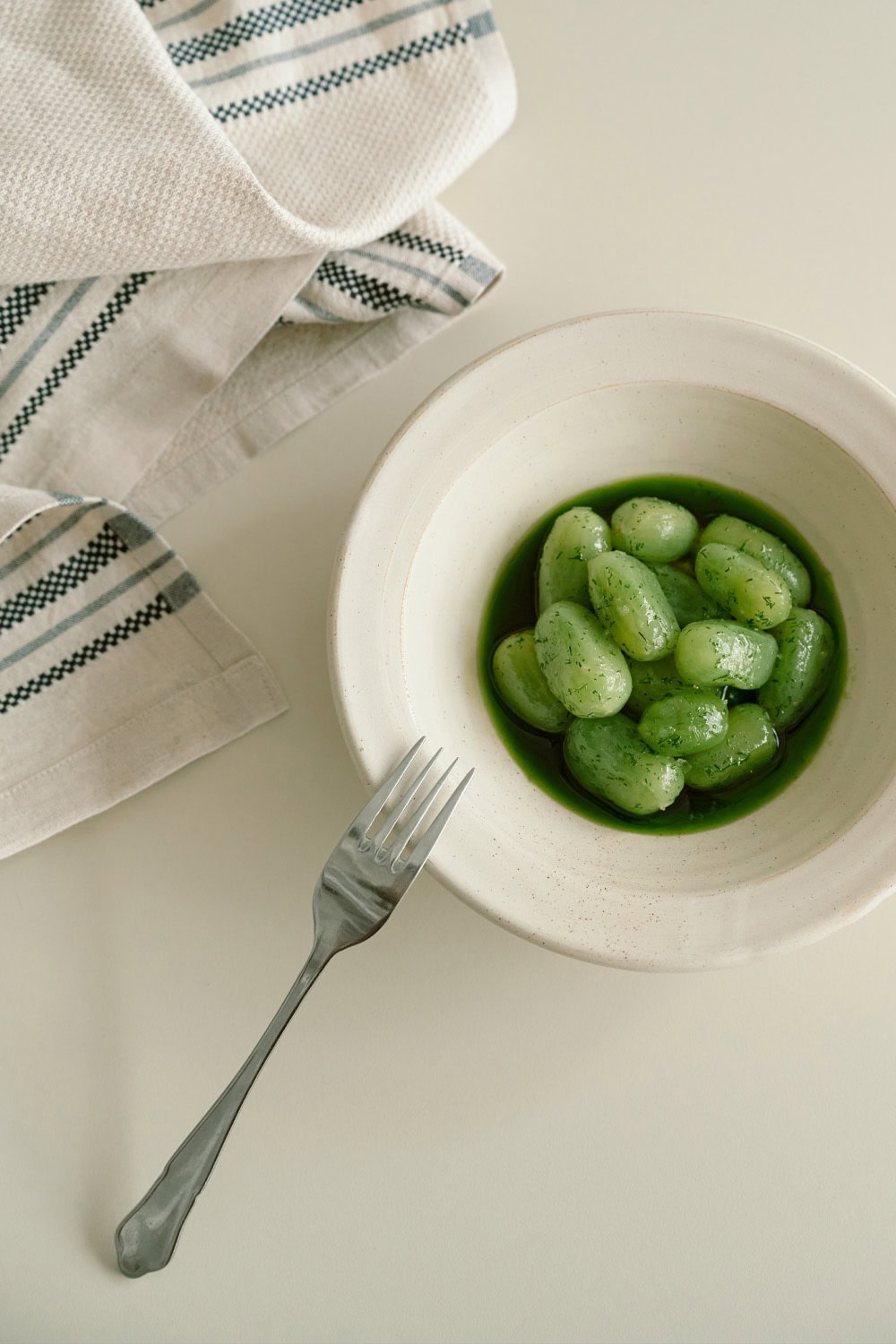
Its arrival is totally unassuming. A small bowl of little green tomatoes. How good could it be? But these cherry-sweet gems will set the bar high for the rest of the evening – each mouthful bursting with all the hits of a good bite: sweet, salty, savoury, and surprising. It’s like the taste of summer, singing.
You’ll dream about that balance of flavours – the notes of fresh dill, hibiscus vinegar and smoked olive oil – for weeks after. And when you go crawling through the web, wanting to affirm that surely you’re not the only one feeling these feelings, you’ll find a post from 2023. A caption underneath a different tomato dish – a bowl of Oxhearts in glossy burnt butter – with the comment: “This was so good, I want to swim in it.” Others are in the know, too.
But blink, and you might miss this particular dish – for the menu at Ouzeri changes seasonally. “That’s the thing about summer: for a few weeks, we get about 30 to 35 kilograms of these green date, sungreen and green bee tomatoes from our local supplier, Meuse Farm. Then they’re gone,” says chef-owner Nic Charalambous.
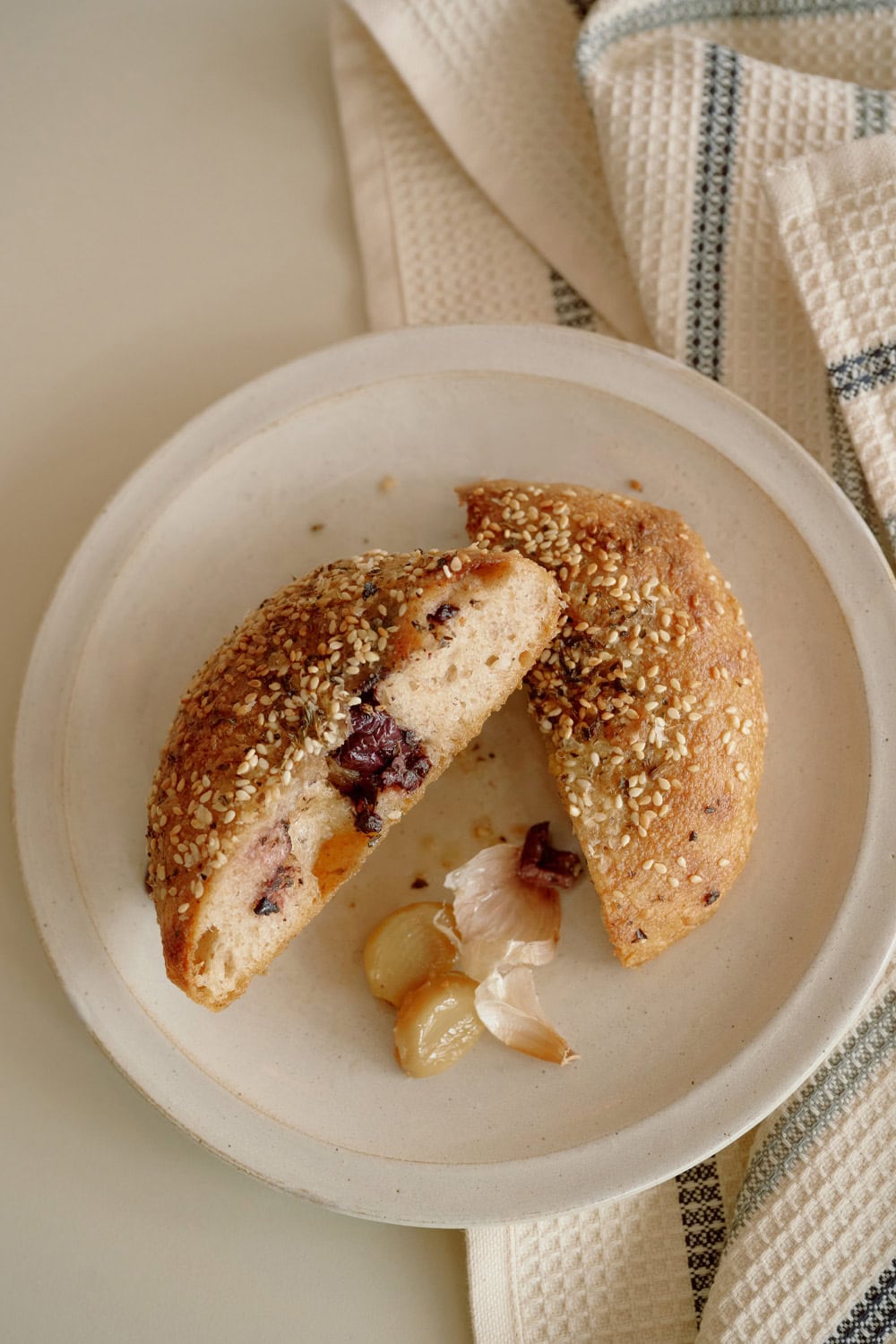
Dishes like these may be reluctantly retired, but there is one that has stayed the course since the restaurant first opened its doors on Cape Town’s Wale Street in 2022. The Eliopita – a warm olive bread with roasted garlic and anchovies – has loyal customers coming back again and again.
“We have people who come in and order it as soon as they sit down – before they’ve even ordered drinks.”
It’s a dish that perhaps speaks directly to the food language at Ouzeri – a modern interpretation of an old classic. Nostalgic references to the best of Greek and Cypriot cooking, with a surprising spin. It’s one that goes to the heart of memory – to a grandmother’s kitchen. An axis around which a large part of this story revolves.
“Every year we’d go back and visit my grandmother in Cyprus and the whole house would smell of this bread. She’d bake enough for us to take home in the freezer. Making it with her, pitting the olives – it’s something I’ve done since I was very young. It’s been special to see how something I feel so personally connected to has become so loved by others.
My parents worked quite hard. They owned a Spar, like many Greeks do, and were working a lot, so I was very much raised by my grandparents. My grandmother was just 16 when she came by boat from Cyprus to South Africa. You’ll find with a lot of immigrants that they bring their entire culture to the place they’re moving to – the seeds of flowers and vegetables that grow there, their pots and pans.”
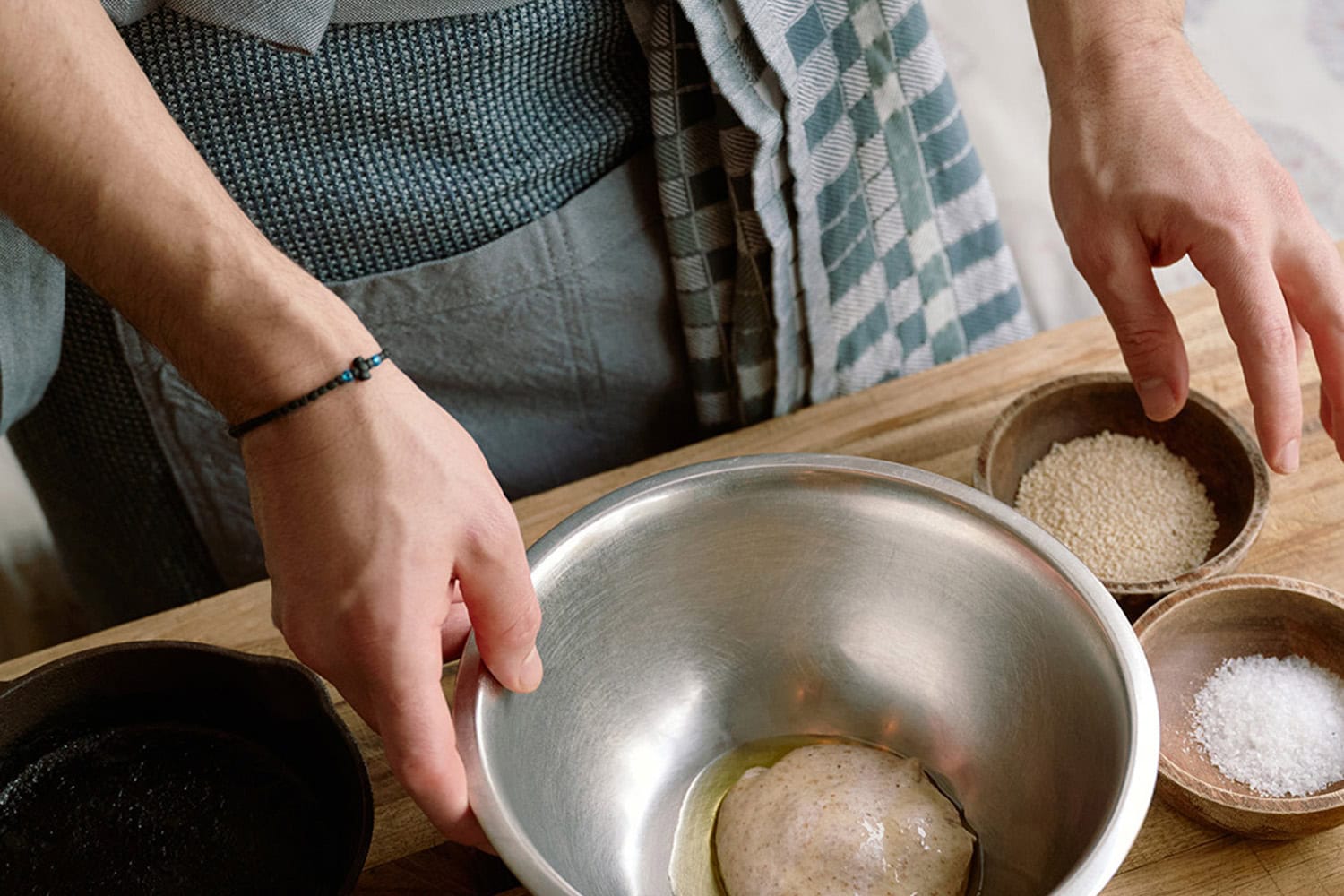
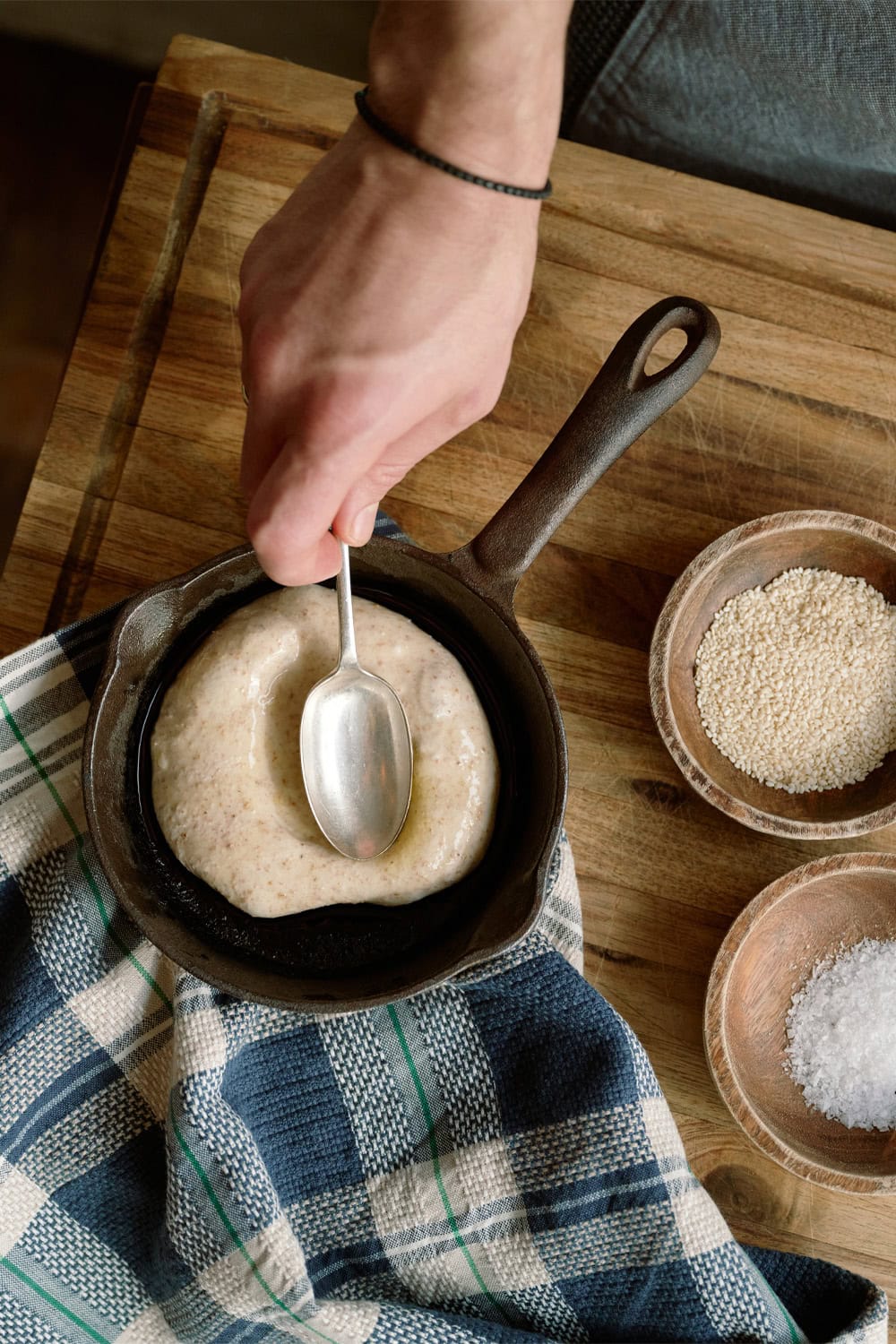
“I was raised in that environment – of an immigrant trying to recreate the world they’d left behind. I liked being around that. And such a big part of it was the food and the cooking. So from an early age, it became the thing that I wanted to do.”
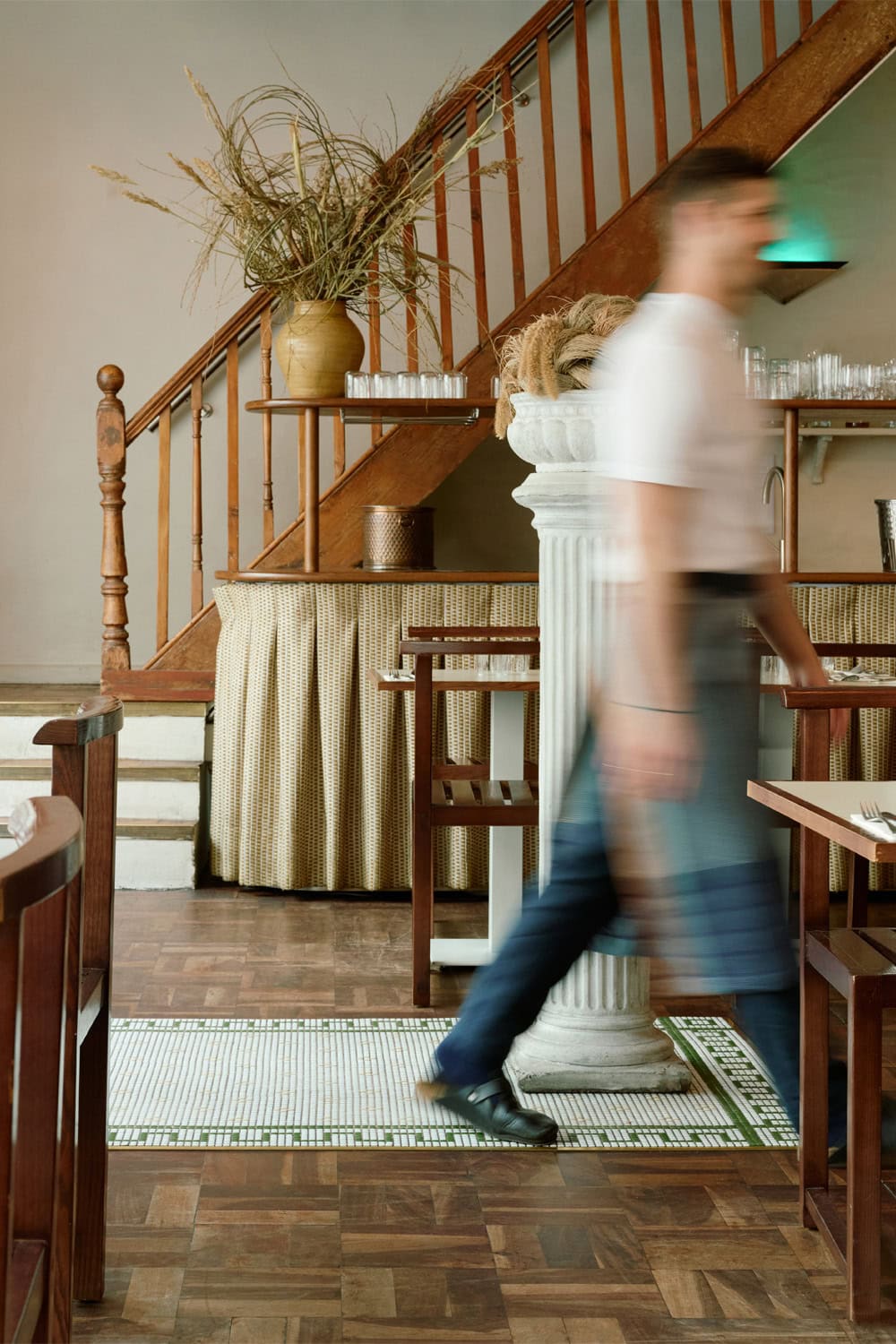
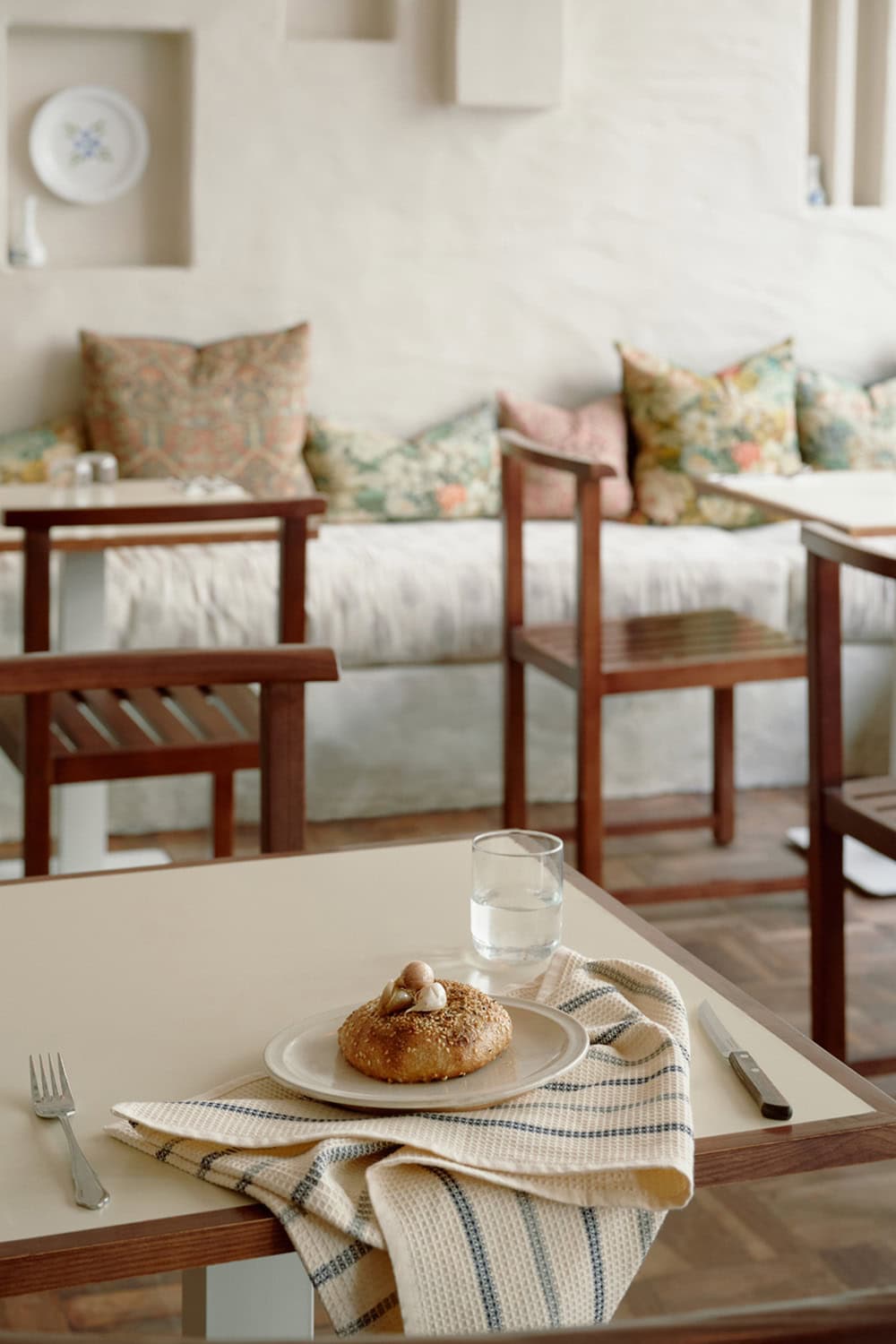
You’ll find this feeling of nostalgia running throughout Ouzeri, from the dishes to the décor – the richly textured cushions, the simple wooden chairs akin to those you’d find in a traditional Greek tavern, and the white walls and arched niches that reference Cycladic architecture. But all of it is done in a way that’s neither kitsch nor cliché. It feels evolved, contemporary, and casually sophisticated.
“From the beginning, that was always the goal – not to lean on the Mykonos stereotype. To show people that Greek cuisine can be more than grilled fish, Greek salad, and a bunch of dips. Those are delicious in their own right, but we wanted a different interpretation. A feeling of home, but unexpected.”

If his approach to food takes the path less trodden, so too did his journey to opening Ouzeri. After studying at Silwood, he found himself restless in the traditional restaurant world. “I hated working in restaurants. Which was strange, because that’s what I’d spent my life wanting to do. So I deviated.”
After studying, Nic went into private cheffing, and then over to Dubai, where he worked with Natasha Sideris of the established Tashas Group. “It was a great experience – it’s fast and demanding. You learn quickly. But it wasn’t the right place for me. During that time I started working on what I really wanted to do – the idea was forming.”
Nic returned to Cape Town and spent two years running pop-ups. Perhaps freed from the predetermined parameters and layers of influence that might accrue through years of working in restaurant kitchens, he quickly began refining an offbeat idea that would eventually become Ouzeri.
“A big part of being a chef is learning from other people and picking up tips and tricks. I missed out on that, but at the same time it did help when I was able to open the doors here, because I didn’t have these preconceived ideas. I think that’s what happens a lot – you work for other people and then when you open your own thing, it’s not really opening your own thing, because it’s a rework of someone else’s ideas or influences.”


What he has built is a space where simplicity and innovation meet. An original take on the familiar that feels both experimental and accessible. “The tuna dish, for instance – I’ll tell people this is what we use, and where to get it. So our customers go to Olive Branch Deli in Kloof Street and say they’d like the Andante olive oil and the Madagascan black pepper. I like that – that you can come here because you want to, but you could also make it at home. It’s not rocket science, but the ingredients are very good.”
And in the quest for ‘good’, Ouzeri quietly defines itself on its own terms. Yes, it has deservingly found its way onto Discovery’s 50 Best list, but Nic seems more intent on following what feels instinctive and true. Maintaining intention, while leaving room to evolve. “There’s this hype cycle that happens in the industry – everything is ‘hot new’ or ‘best new’, and it becomes hard to discern. I guess that’s marketing. But we try to filter that out.”
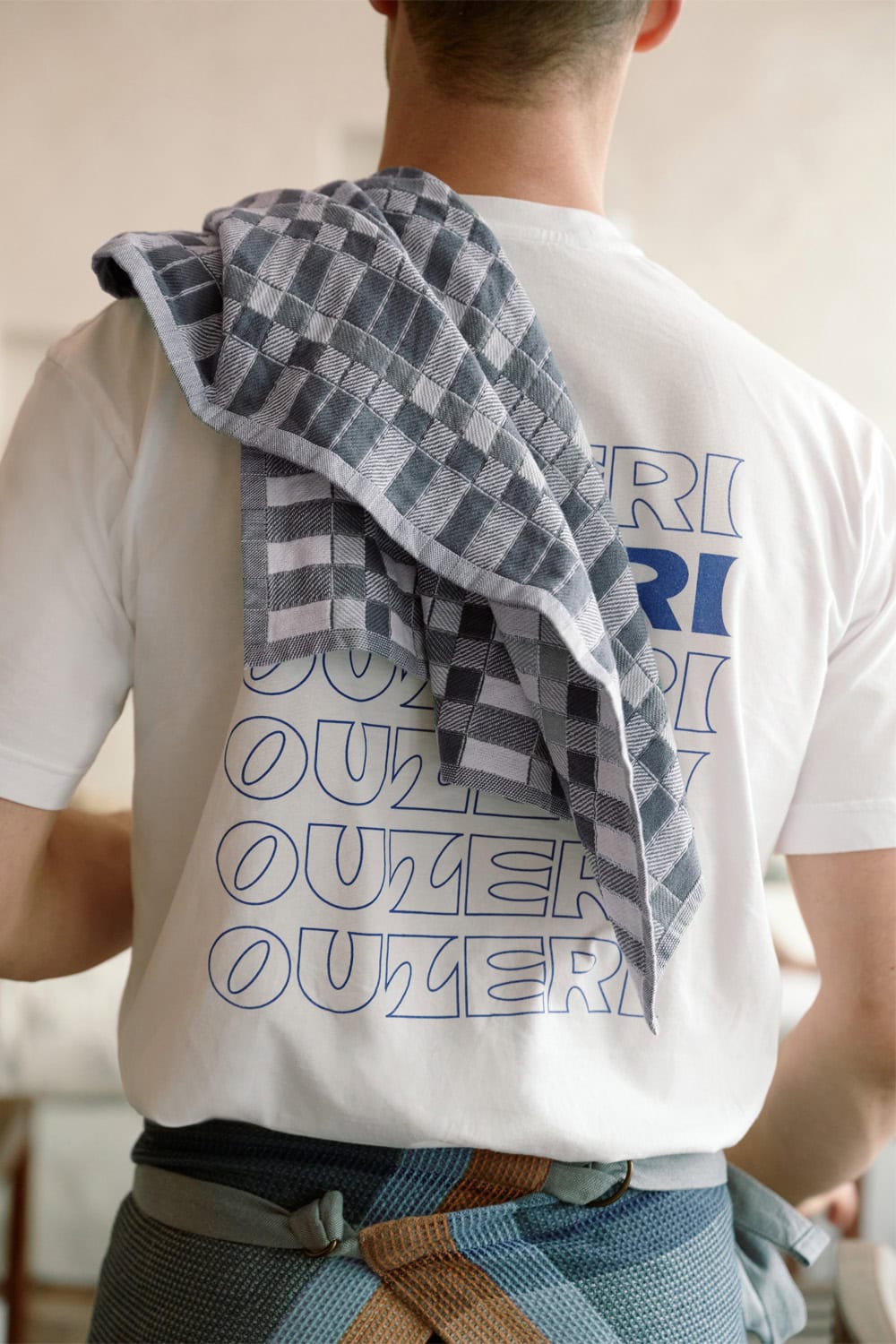
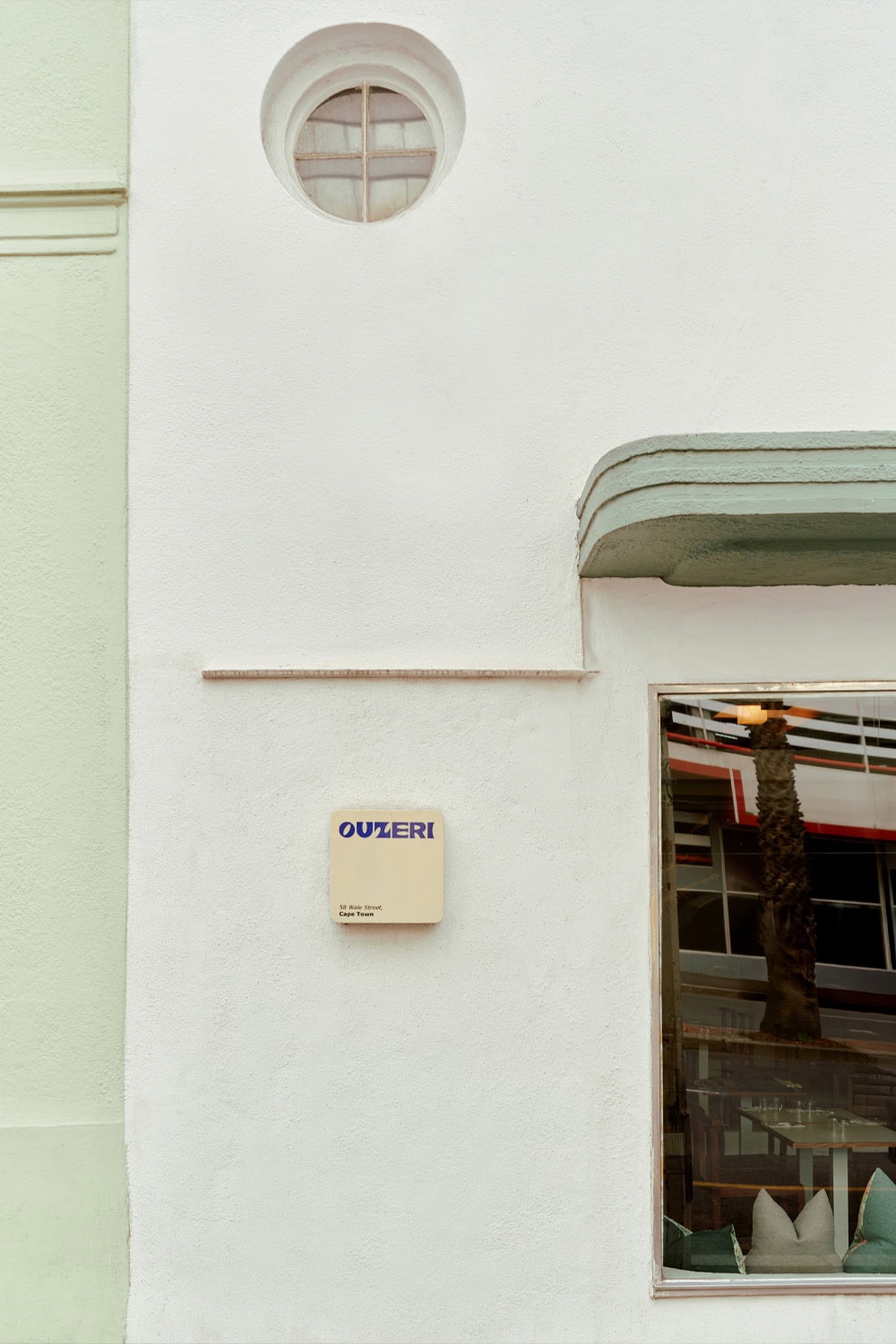
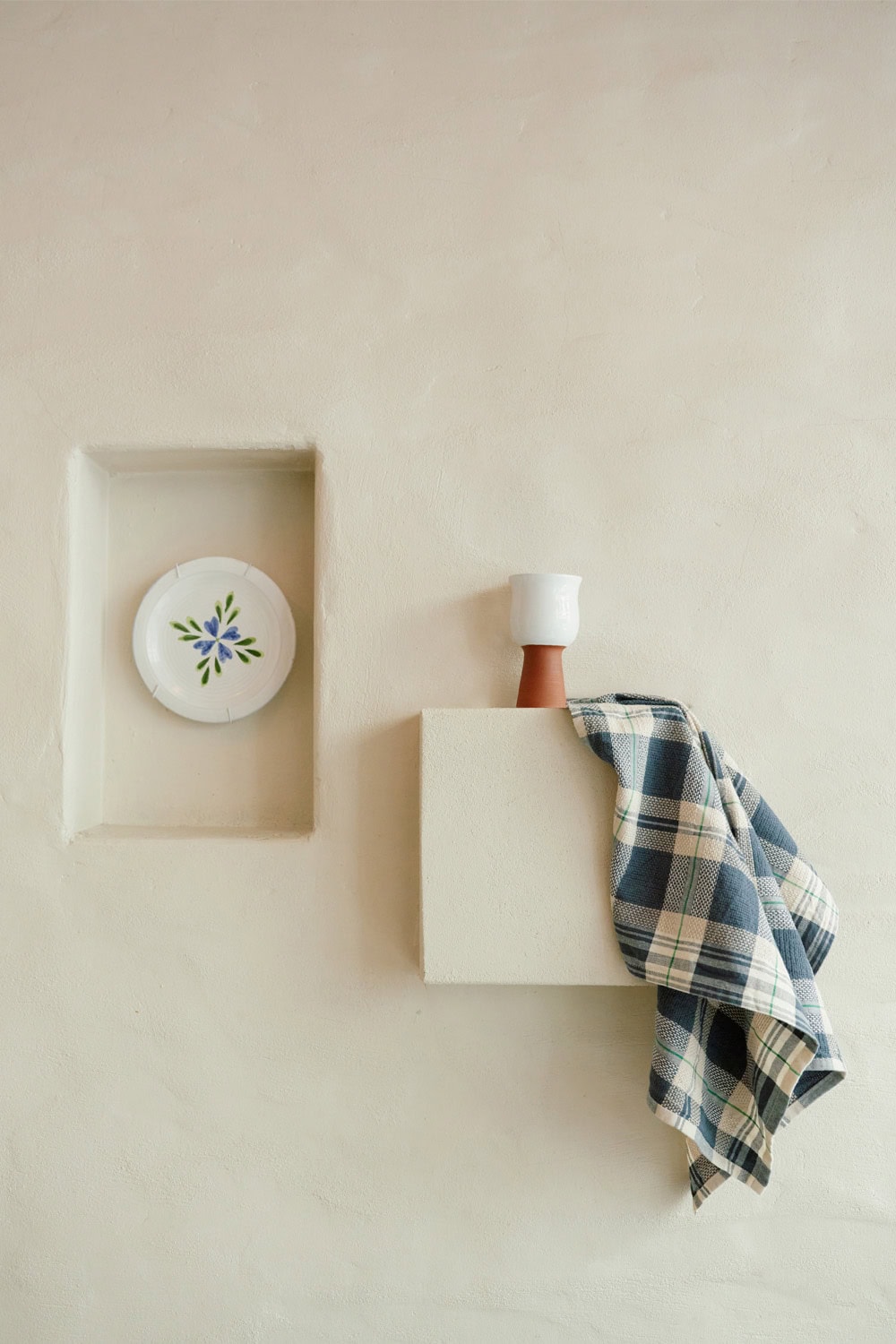
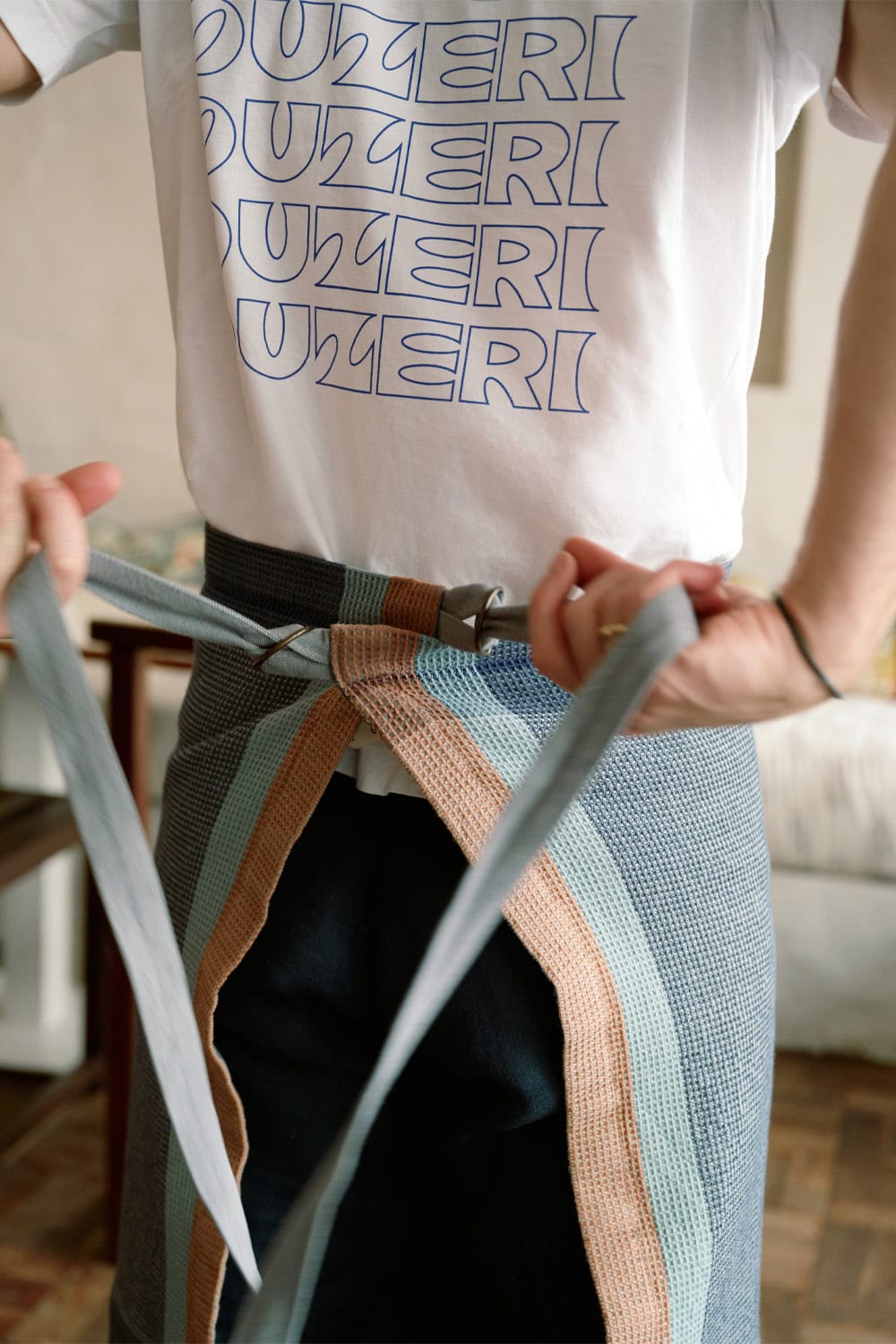
And yet, a spell is still cast by dining in. The service is good, quick. The wine list is well curated with small-batch offerings. An experience to be savoured, no doubt.
“It’s about beauty. Quality. Intention. That’s important – you can’t cut corners. I’ll often say to the staff, people might have saved up to come here. Yes, it’s about the food, but it’s also about the memory you are recalling or making. You are cultivating an experience, and it needs to be beautiful.”
And no doubt, it succeeds.
For if the insistence of the everyday – the hours spent behind a desk or at the helm of a steering wheel in slow-moving traffic – pulls life back from its most gorgeous parts, then it is places like this that help you remember. Of food’s unique ability to make you a time-traveller – transporting you to roads that are both tenderly familiar and brand new. The realisation is potent. It bursts forth on your tongue like a ripe green tomato. And the bell of pleasure tolls. Again, and again, and again.
Words by Georgina Selander
Photography by Nicola Suttle
Featured Products
More from our blog:
In Studio with Amy Ayanda | The Subtle Magic of Scent with Tres Nagual | Nothing Lasts Forever


